In the complex world of the industrial processes, fluid control is not a luxury; it is a necessity. Whether it is the sensitive lab experiments or large hydraulic systems the capability to precisely control the flow rate can have a significant effect on efficiency, safety, and quality of products. We realize the value of this accuracy at Aashish Metals and that is why we are working on one of the essential elements, the needle valve.
What are Needle Valves and How they Work
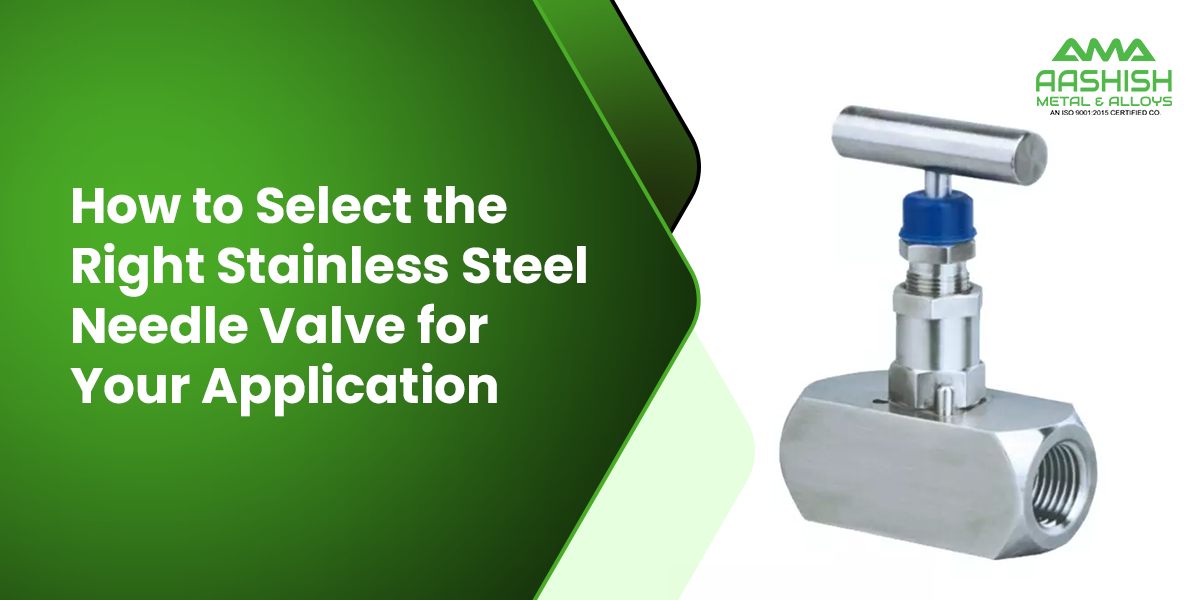
In contrast to their larger counterparts, e.g. ball valves or gate valves, needle valves are made to serve only one aim; that of giving an extremely precise and precisely adjustable control of flow. The valves are necessary in cases where the metering of fluids with high precision is needed.
The needle-shaped plug of a needle valve is referred to as the core of a needle valve. This needle will change the area of flow as it moves linearly up or down the valve seat. This is a very easy to use mechanism as it is possible to make very small changes in the rate of flow and the needle valves have become invaluable in any application where even the slightest change can be decisive.
Features and Benefits of Stainless Steel Needle Valve
The features and benefits of SS needle valves include:
- Excellent precision: the tapered needle shape allows minute flow variation, which is important to use in processes that require metering precision.
- High-Pressure Strength: numerous needle valves are designed in such a way that they can work even at high pressure rates, so they can be relied on to operate in high-pressure conditions.
- Small size: they are compact and suitable to be installed in small space.
- Strong built: SS needle valves are generally made of a strong construction material such as stainless steel or brass, which makes them last longer.
- Consistent Metering: they are good in applications that demand constant and reproducible flow rates.
Applications of Stainless Needle Valve Across Diverse Industries
The SS Needle Valves are in their niche in a vast number of industries:
- Instrumentation: Regulation of flow to pressure gauges, flow meters, etc.
- Laboratories: Control of the gaseous and liquid flow in analytical equipment, to guarantee precision in the outcomes of the experiment.
- Chemical Processing: Additives metering and fine control of chemical reactions.
- Hydraulic Systems: Hydraulic fluid flow can be adjusted to be able to control actuators and machinery in a precise way.
- Gas Chromatography: The flow of carrier gas should be controlled and the sample analyzed properly.
- Sampling Systems: This is the means of controlling the flow of sampled fluids, keeping the sample intact.
How to Choose the Right SS Needle Valve?
Selecting the right stainless steel needle valve requires matching its pressure/temperature ratings, material compatibility (316 SS for corrosion resistance), flow capacity and port configuration (angle or in-line) to your system. Key considerations include selecting high-pressure, durable, and precise throttling valves for gases or fluids.
Key Selection Criteria for stainless steel needle valve include:
- Pressure and temperature ratings: be sure that the valve you are picking has the ability to withstand the maximum pressure that your system will operate at (as high as 10,000 psi) and the highest temperature of your system. Smooth stainless steel versions are specifically appropriate in strenuous settings that require high pressures, temperatures, and corrosive solutions.
- Flow Control Requirements (Orifice Size): The orifice size must match your precision needs, a smaller orifice will provide a controlled flow regulation of finer flow and a larger orifice will provide higher volumes of flow.
- Material Compatibility: 316 Stainless Steel is the grade of choice in most of the situations where consistent corrosion resistance is needed. Nevertheless, in case of very corrosive or chemically aggressive conditions, it is very advisable to upgrade to 904L or SMO 254. In any event, ensure that the material selected is chemically compatible with the fluid or the gas in question.
- Type of Valve ( Configuration): The setting must be compatible with your system layout. In-line valve is ideal when there is a continuous straight flow in the system whereas the angle valve positioned at 90 degrees is effective on the tight spaces which will not require any extra fittings and will be easy to install.
- Stem Tip/End Connections: A Regulating/V-stem is the most suitable in situations where the flow needs to be adjusted in fine, small steps whereas a Soft Seat tip offers a tight closure and keeps the seat surface free of wear or damage. The selection of end connection is also a critical factor to be considered – in order to ensure a leak-free, secure assembly, use fittings that are compatible with your pipeline (e.g., NPT or Tube Fittings).
Get SS Needle Valve from Aashish Metals
The rightly chosen Needle Valve saves time, prevents leakages and can be reliably used even in the working conditions with pressure. Good quality valves provide accurate control, reduce maintenance and assist in maintenance of safety standards particularly working with dangerous fluids or in the conditions of variable pressures.
We supply a full range of stainless steel needle valves including SS 304 Needle Valve, SS 316 Needle Valve, SS 316Ti Needle Valve, and SS 321 Needle Valve, among others. Investing in a reliable Needle Valve up front saves costs in the long run by preventing failures, leak events, and equipment damage.