Hastelloy Pipes & Tubes Supplier in India – C276 & C22, Seamless & Welded
Home > Materials > Hastelloy Products > Hastelloy Pipes & Tubes
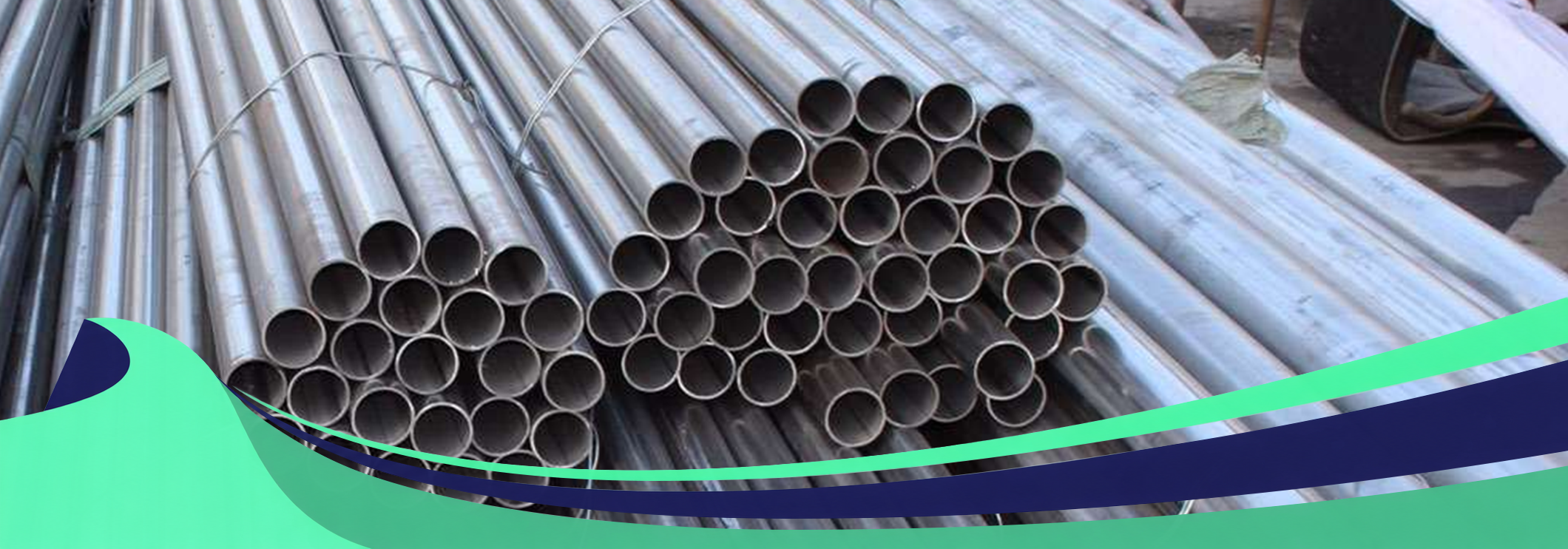
If a process line handles hot hydrochloric acid, wet chlorine or sour gas, ordinary stainless steel will not last a season, and that is exactly the problem Hastelloy pipes & tubes were built to solve. At Aashish Metals, we supply Hastelloy C276 and C22 seamless and welded pipes and tubes to chemical plants, refineries, pharma units and EPC contractors across India and overseas. Every length ships with a heat-traceable EN 10204 3.1 mill test certificate, and every order is checked against ASTM B622, B619 and B626 requirements before it leaves our warehouse. Whether you need a few metres of instrumentation tubing for a pilot plant or a full pipe package for a reactor line, our team helps you choose the right grade, wall thickness and end finish the first time. This page walks you through grades, sizes, standards, welding tips, price drivers and applications, so you can shortlist with confidence and send us an enquiry that gets a fast, accurate quote.
Technical data
Hastelloy Plates & Sheets Specification
| Parameter | Details |
|---|---|
| Standards | ASTM B575, B333, B435 / ASME SB575, SB333, SB435 |
| Width | 1000 mm / 1219 mm / 1250 mm / 1500 mm / 2000 mm |
| Length | 2000 mm / 2440 mm / 2500 mm / 3000 mm / 6000 mm |
| Sheet thickness | 0.1 mm to 6 mm |
| Plate thickness | 6 mm to 100 mm |
| Coil / strip thickness | 0.1 mm to 3 mm |
| Hardness | Soft, Hard, Half Hard, Quarter Hard, Spring Hard |
| Finish | HR, CR, 2B, 2D, BA, No.8 Mirror, SATIN, Plastic Coated |
| Form | Plates, Sheets, Coils, Foils, Strips, Blanks, Rings, Profiles, Perforated |
| Test certificates | EN 10204 Type 3.1 / 3.2, NABL Accredited Lab Reports |
Hastelloy Plates & Sheets Grade Equivalents
| Grade | UNS no. | Werkstoff Nr. | JIS | EN | AMS | Key standard |
|---|---|---|---|---|---|---|
| Hastelloy C276 | N10276 | 2.4819 | NW 0276 | NiMo16Cr15W | 5276 | ASTM B575 |
| Hastelloy C22 | N06022 | 2.4602 | NW 6022 | NiCr21Mo14W | 5409 | ASTM B575 |
| Hastelloy B2 | N10665 | 2.4617 | — | — | — | ASTM B333 |
| Hastelloy B3 | N10675 | 2.4600 | — | — | — | ASTM B333 |
| Hastelloy X | N06002 | 2.4665 | — | NiCr22Fe18Mo | 5536 | ASTM B435 |
Hastelloy C276 vs C22 vs B2 — Key Differences at a Glance
| Property | Hastelloy C276 | Hastelloy C22 | Hastelloy B2 |
|---|---|---|---|
| UNS no. | N10276 | N06022 | N10665 |
| Ni content | ~57% | ~56% | ~69% |
| Mo content | ~16% | ~13% | ~28% |
| Cr content | ~15.5% | ~22% | ~1% max |
| W content | ~3.7% | ~3% | — |
| Best resistance | Oxidising + reducing media | Oxidising acids, mixed acid | HCl at all concentrations |
| Max service temp. | ~1038 °C | ~1038 °C | ~538 °C |
| Key standard | ASTM B575 | ASTM B575 | ASTM B333 |
| Typical use | FGD, chemical reactors | Pharma, mixed acid | Hydrochloric acid plants |
| Werkstoff Nr. | 2.4819 | 2.4602 | 2.4617 |
| Supplier page | C276 Plates | C22 Plates | C276 Round Bars |
Certifications & Standards: Standards We Supply Against
| Standard body | Specification | Applies to |
|---|---|---|
| ASTM | B575 | Hastelloy C276, C22 sheet & plate |
| ASTM | B333 | Hastelloy B2, B3 sheet & plate |
| ASTM | B435 | Hastelloy X sheet & plate |
| ASME | SB575 | Pressure vessel / boiler applications |
| ASME | SB333 | Pressure vessel applications |
| ASME | SB435 | Pressure vessel applications |
| AMS | 5276 | Hastelloy C276 aerospace |
| AMS | 5536 | Hastelloy X aerospace |
| DIN / EN | 2.4819, 2.4602, 2.4617, 2.4665 | European equivalent grades |
| ISO | 9001:2015 | Quality management system |
Grades We Stock and How to Choose
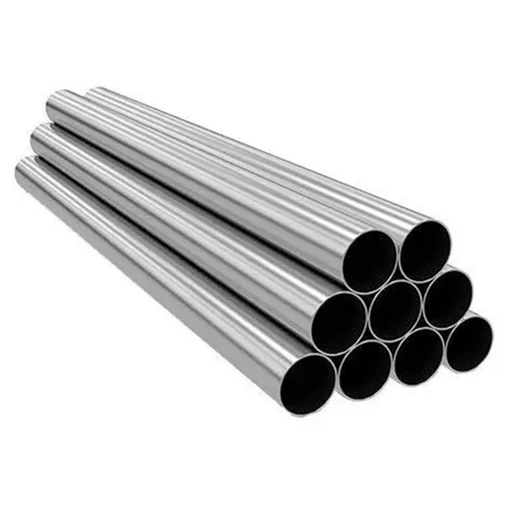
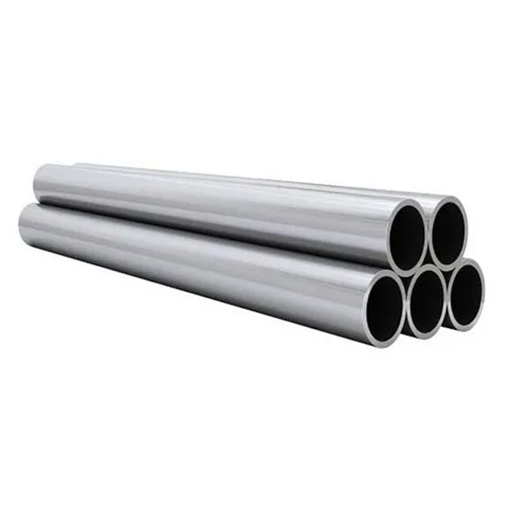
Hastelloy C276 pipe and tubing (UNS N10276)
C276 is the most widely specified Hastelloy grade, and for good reason. With around 15–17% molybdenum and 3–4.5% tungsten, it shrugs off both oxidising and reducing chemicals, including wet chlorine, hypochlorite and ferric and cupric chlorides. If you are unsure which alloy to pick, hastelloy c276 pipe is the safe starting point for mixed or unpredictable process streams. If you are comparing hastelloy c276 tubing against other alloys, this is the grade most buyers shortlist first. Alternate names you will see on drawings include alloy c276 pipe, alloy c276 tube, c276 pipe, c276 tube and hastelloy c 276 tubing.
Hastelloy C22 pipe and tubing (UNS N06022)
C22 carries more chromium (20–22.5%) than C276, which gives it an edge in strongly oxidising acids, and a better ability to resist pitting and crevice attack in hot chloride solutions. Buyers who need hastelloy c22 tubing for heat exchangers or sampling lines will find the same chemistry in the tube form. Specifiers also write it as c22 pipe, alloy c22 pipe, c22 seamless pipe or alloy c22 seamless pipe. It is common in flue-gas desulphurisation, pesticide and pharmaceutical plants where the chemistry swings between oxidising and reducing.
Hastelloy X pipe and tubing (UNS N06002) – on request
Hastelloy X is a different animal. It is chosen for heat rather than wet corrosion, holding strength and oxidation resistance to roughly 1,150 °C. If your enquiry is for hastelloy x pipe or hastelloy x tubing, tell us the temperature and atmosphere and we will confirm availability and lead time. [confirm stock status before publishing]
Hastelloy B2 (UNS N10665)
| Property / use case | Hastelloy C276 | Hastelloy C22 | Hastelloy B2 | Hastelloy X |
|---|---|---|---|---|
| UNS number | N10276 | N06022 | N10665 | N06002 |
| Werkstoff (W.Nr.) | 2.4819 | 2.4602 | 2.4617 | 2.4665 |
| Main strength | Broad resistance, oxidising and reducing | Oxidising acids, chloride pitting | Reducing acids, especially HCl | High-temperature strength and oxidation resistance |
| Best for | Mixed chemical streams, FGD, pulp & paper | Oxidising / mixed acids, pharma, pesticides | Pure HCl, acetic and sulphuric (no oxidisers) | Furnace parts, combustion, exhaust systems |
| Avoid when | Strongly oxidising hot acids (consider C22) | Purely reducing HCl (consider B2) | Any oxidising contaminant, such as ferric or cupric salts | Wet corrosive service |
| ASTM pipe spec | B622 / B619 | B622 / B619 | B622 / B619 | B622 / B619 |
Engineer’s quick rule
Mixed or unknown chemistry: start with C276. Strongly oxidising and chloride-rich: look at C22. Pure reducing HCl: B2. High temperature and dry: Hastelloy X. When the media is borderline, send us the concentration, temperature and pressure and we will help you narrow it down before you order.
Fittings, Flanges and Valves to Match Your Pipe
A pipeline is only as corrosion-resistant as its weakest component. To avoid galvanic mismatches, specify fittings in the same alloy as the pipe. We supply matched components from a single source:
- Hastelloy pipe fittings – elbows, tees, reducers, caps and stub ends, including hastelloy c276 pipe fittings and hastelloy c22 pipe fittings for C22 lines
- Hastelloy tube fittings – compression and instrumentation fittings, also available in C22
- Socket weld fittings and threaded fittings – for small-bore lines
- Flanges – weld neck, slip-on, blind and lap-joint, ANSI and ASME
- Needle valves, instrumentation ball valves and manifold valves
- Hastelloy fasteners (or C22 fasteners) – studs, nuts and bolts for corrosion-resistant flange joints
- Hastelloy plates and sheets and round bars – for fabricated and machined parts
In short, whether you are searching for hastelloy fittings, hastelloy c276 fittings, or a complete instrument-tubing kit, the full list sits under our Hastelloy products hub and instrumentation fittings pages.
Using Hastelloy tubing with Swagelok-type compression fittings
Engineers often ask about hastelloy tubing swagelok compatibility, or whether swagelok hastelloy fittings can be used with our tube. Twin-ferrule compression fittings from leading manufacturers work well with Hastelloy tubing, as long as the tube is seamless, annealed, has a scratch-free surface and holds a tight OD tolerance. Always check the fitting maker’s published limits for tube hardness and wall thickness, and match the fitting material to the tube. Swagelok is a registered trademark of its owner, and Aashish Metals is an independent supplier with no affiliation.
Welding Hastelloy Pipe: Practical Guidelines
Nobody wants a corrosion-resistant pipe that fails at the weld. If you are welding hastelloy pipe on site or in the shop, these practices are widely accepted by fabricators:
- Choose the right process. GTAW (TIG) is preferred for root and thin sections; GMAW and SMAW are used for heavier walls.
- Match the filler. ERNiCrMo-4 for C276 and ERNiCrMo-10 for C22. Overalloyed fillers are used to offset segregation in the weld metal.
- Clean thoroughly. Remove oil, grease, paint, marker ink and any sulphur or lead-bearing contaminants; Hastelloy cracks if contaminated.
- Keep heat input low. Use stringer beads, and keep interpass temperature at or below about 150 °C.
- Shield and purge. Use pure argon (or argon-helium) and back-purge the root to avoid oxide tint.
- Post-weld. Standard practice is to use the weld as-welded; post-weld heat treatment is normally not needed. Pickle or brush off heat tint for the best corrosion life.
- Qualify the procedure. Follow ASME Section IX (WPS/PQR) and your project specification.
Need help with a specific joint? Our technical team can share a starting point for wall thickness, filler and preparation. This is general guidance, so always follow your qualified welding procedure.
Quality Assurance and Supply Process
Tests available on request
- Chemical analysis (spectro) and PMI
- Tensile, yield and elongation testing
- Hardness test
- Flattening and flaring tests (tubes)
- Hydrostatic test and eddy-current or ultrasonic NDT
- Intergranular corrosion (IGC) testing to ASTM G28 where specified
- Pitting resistance test to ASTM G48 where specified
- Micro and macro examination, grain size
- Third-party inspection (agency of your choice)
Value-added services
- Cut-to-length and precision cutting
- Bevelling and end preparation
- Threading and grooving
- Bending, coiling and U-bend forming through partner shops
- Pickling and passivation
- Custom marking and export packing
Why Buy from Aashish Metals
- One source for the whole line. Pipes, tubes, fittings, flanges, fasteners and valves in matching alloys, so you deal with one supplier, not five.
- Wide alloy range. Alongside Hastelloy we stock Inconel, Monel, Alloy 20, duplex, titanium and copper-nickel, so you can compare alternatives with us instead of guessing.
- Documents you can audit. Heat numbers on the pipe, MTC on paper, PMI on request.
- Honest advice. If a cheaper alloy will do, we will tell you.
- Export-ready. Experienced in export documentation and packing for global projects.
- Reachable people. Engineers who answer technical questions, not just take orders.
Searching for reliable hastelloy pipe suppliers or hastelloy tubing suppliers? Our sourcing team works with approved mills, so as hastelloy c276 pipe suppliers and hastelloy c276 tube suppliers we can offer consistent quality and documented traceability, whether the order is one length or one container.
Learn more about Aashish Metals, read our technical blog, or contact our team directly.
Tests available on request
- Chemical analysis (spectro) and PMI
- Tensile, yield and elongation testing
- Hardness test
- Flattening and flaring tests (tubes)
- Hydrostatic test and eddy-current or ultrasonic NDT
- Intergranular corrosion (IGC) testing to ASTM G28 where specified
- Pitting resistance test to ASTM G48 where specified
- Micro and macro examination, grain size
- Third-party inspection (agency of your choice)
Value-added services
- Cut-to-length and precision cutting
- Bevelling and end preparation
- Threading and grooving
- Bending, coiling and U-bend forming through partner shops
- Pickling and passivation
- Custom marking and export packing
Frequently Asked Questions
They are used wherever ordinary metals corrode quickly: chemical reactors, acid transfer lines, FGD scrubbers, pulp bleaching, sour-gas systems, pharmaceutical plants and seawater heat exchangers. Their combination of nickel, molybdenum and chromium resists chlorides, acids and both oxidising and reducing chemicals.
C276 has more molybdenum and is excellent across a broad range of reducing and oxidising media. C22 has more chromium, so it performs better in strongly oxidising acids and hot chloride solutions. If your chemistry is mixed or unknown, C276 is the usual starting point; if it is oxidising-heavy, consider C22.
Seamless C276 pipe and tube are supplied to ASTM B622 (or ASME SB622), and “B622 N10276” simply means that specification for UNS N10276, which is C276. Welded pipe is covered by ASTM B619, and welded tube by ASTM B626.
There is no fixed rate, because the price follows nickel and molybdenum markets and changes with size, wall thickness, finish and quantity. Send your grade, OD × WT, length and quantity and we will quote the current price per kg or per metre.
Yes, Hastelloy welds very well. Use GTAW with a matching filler (ERNiCrMo-4 for C276, ERNiCrMo-10 for C22), keep the surface spotless, hold heat input and interpass temperature low, and back-purge with argon. Post-weld heat treatment is normally not required.
Ready to specify Hastelloy pipes & tubes?
Tell us the grade, size and quantity, and get a clear, itemised quote with the right certificates. Our engineers can also review your process conditions and suggest the best grade for the job.
Products
Hastelloy
Please feel free to contact us. We will get back to you with 2 business days. Or just call us now.