Steel pipes are one of the most widely used industrial products in the world. They travel through the streets of cities, up walls of factory buildings, over oil fields and across continents carrying life sustaining resources. Steel pipes power the human circulatory system, from drinking water piping to natural gas pipes.
But the selection of a proper steel pipe can be an intimidating job for a buyer, engineer or project manager. There are several types, dozens of grades, and a variety of size specifications to choose from. This is an all-encompassing guide that takes the mystery out of it. You will gain an understanding of the types of steel pipes, how they are fabricated, which type is most appropriate for your application, how to read a pipe size chart and what to consider when purchasing steel pipes.
What Is a Steel Pipe?
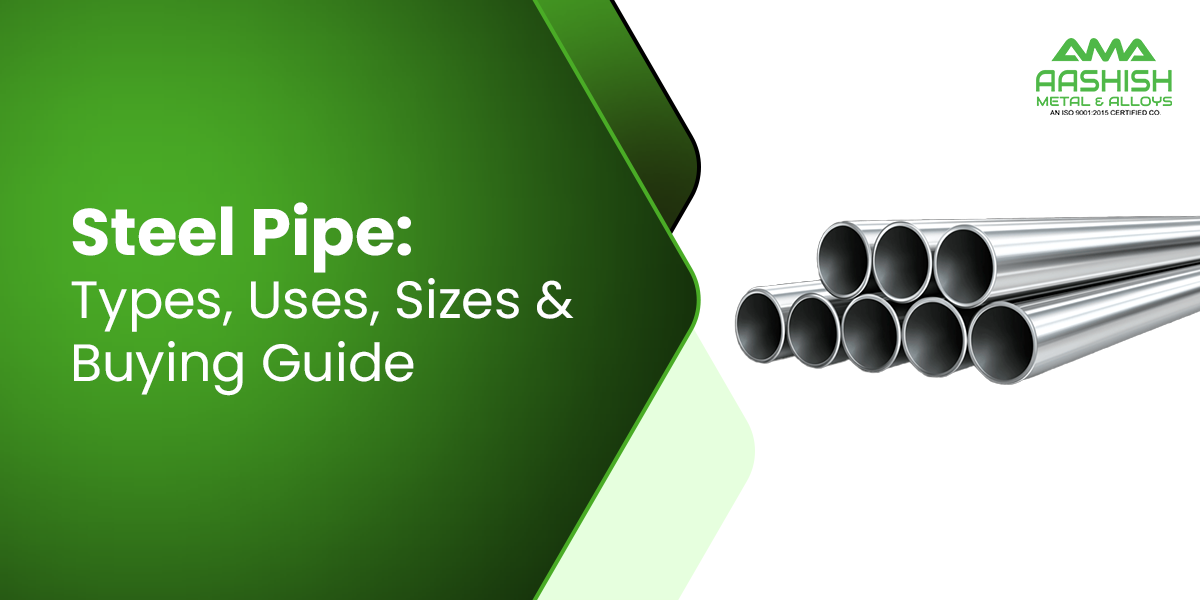
Steel pipe is a hollow, cylindrical pipe made from steel for the purpose of transferring fluids, gases or loads of steel. Steel pipes are manufactured products, built to exact dimensional tolerances, pressure ratings and material specifications established by international standards, as opposed to the regular metal tubes.
Types of Steel Pipes
Steel pipes are broadly categorized based on how they are manufactured and the type of steel alloy they contain. Here are the major types:
1. Seamless Steel Pipes
Seamless pipes are produced by heating a solid steel billet to a high temperature and then piercing it through the center using a mandrel to create a hollow tube. Because there is no welded joint, these pipes have a uniform structure throughout their cross-section.
Key characteristics:
- Superior strength and ability to handle high-pressure and high-temperature conditions
- No seam means no weak point along the pipe length
- Widely used in oil and gas drilling, power generation, and chemical processing
Applicable standards: ASTM A106, ASTM A53, API 5L
2. Welded Steel Pipes
Welded pipes are formed by rolling flat steel plates or coils into a cylindrical shape and then joining the longitudinal edges using a welding process. Submerged arc welding (SAW) and electric resistance welding (ERW) are the most common techniques.
Key characteristics:
- Generally more affordable than seamless pipes
- Available in larger diameter ranges
- Suitable for structural applications and low-to-moderate pressure service
Applicable standards: ASTM A53, ASTM A252, API 5L
3. Galvanized Steel Pipes
Galvanized pipes are steel pipes coated with a layer of zinc, typically through a hot-dip galvanizing process. The zinc coating acts as a barrier against moisture and atmospheric corrosion, extending the service life of the pipe.
Key characteristics:
- Excellent corrosion resistance for outdoor and water-contact environments
- Common in residential plumbing, irrigation, fencing, and scaffolding
- Not recommended for high-temperature steam or gas transmission
4. Stainless Steel Pipes
Stainless steel pipes are produced from steel alloyed with chromium (minimum 10.5%) and often nickel. The chromium content forms a passive oxide layer on the surface, giving stainless steel its characteristic corrosion resistance.
Key characteristics:
- Highly resistant to corrosion, oxidation, and chemical attack
- Hygienic surface suitable for food and pharmaceutical industries
- Performs well at both high and cryogenic temperatures
- Higher cost than carbon or galvanized steel but offers longer service life
5. Carbon Steel Pipes
Carbon steel pipes are composed primarily of iron and carbon, with minimal alloying elements. They are the most economical and widely produced category of steel pipe.
Key characteristics:
- High strength and durability at moderate cost
- Suitable for oil, gas, water, and steam transport
- Requires protective coatings in corrosive environments
Not Sure Which Steel Pipe Grade Fits Your Project?
Choosing the wrong grade can mean costly delays, failed inspections, or compliance issues. Talk to our pipe specialists and get a free technical consultation plus a same-day quote based on your exact specs like medium, pressure rating, and budget.
Steel Pipe Grades Explained
Grades define the chemical composition and mechanical properties of a steel pipe. Selecting the correct grade is critical to ensure safety, longevity, and regulatory compliance. Here is an overview of the most commonly referenced grades:
- ASTM A106 Grade B / C: Seamless carbon steel pipes intended for high-temperature service, such as steam and hot process fluid lines. Grade B is the most common, while Grade C offers higher tensile strength.
- API 5L (X42 to X70): Line pipe grades used in oil and gas pipeline systems. The designation (X42, X52, X65, X70) refers to the minimum yield strength in kilopounds per square inch (ksi). Higher grades handle greater pipeline pressures.
- ASTM A312 TP304 / TP316: Austenitic stainless steel pipe grades for corrosive service. TP304 is the general-purpose grade; TP316 adds molybdenum for enhanced resistance to chloride and acidic environments.
- ASTM A53 Grade B: Covers both black and hot-dip galvanized welded steel pipes. Widely used in mechanical, pressure, and ordinary steam, water, gas, and air service.
Always verify grade requirements against your project specifications, applicable codes, and your supplier’s mill test reports (MTRs) before finalizing any purchase order.
Common Uses and Applications of Steel Pipes
- Oil and Gas Pipelines: Seamless and API 5L grade pipes are the standard for drilling, casing, and long-distance transmission of crude oil, natural gas, and refined products.
- Water and Wastewater Systems: Galvanized and coated steel pipes serve municipal water supply, sewage treatment, and stormwater drainage networks.
- Construction and Infrastructure: Structural steel pipes support building columns, piling, scaffolding, handrails, and bridges.
- Chemical and Power Plants: Seamless pipes and stainless steel grades safely carry steam, acids, and high-pressure process fluids.
- HVAC Systems: Welded and galvanized pipes distribute chilled water, hot water, and compressed air across commercial buildings.
- Food, Pharma, and Marine: Sanitary-grade stainless steel pipes meet strict hygiene requirements, while corrosion-resistant alloys handle saltwater environments.
Buying Guide: How to Choose the Right Steel Pipe
Run through this checklist before placing any order:
- What medium is being transported? Water, gas, oil, steam, or chemicals each have specific compatibility needs.
- What are the pressure and temperature conditions? High-pressure or high-temperature service requires seamless pipes with the correct schedule and certified grade.
- Is corrosion a concern? Outdoor, marine, or chemical environments call for stainless steel, galvanized coatings, or external protective linings.
- What size and wall thickness do you need? Use the size chart below and select the appropriate schedule.
- Are there standards or certifications to meet? Verify compliance with ASME B31.3, ASTM, or API requirements.
Standard Steel Pipe Size Chart
The table below lists standard steel pipe dimensions covering Nominal Pipe Size (NPS), Outer Diameter (OD), wall thickness for Schedule 40 and Schedule 80, and corresponding weight per meter. These values are based on ANSI/ASME B36.10M standards.
NPS | OD (inches) | Wall Thickness Sch 40 | Wall Thickness Sch 80 | Weight/m Sch 40 | Weight/m Sch 80 |
|---|---|---|---|---|---|
1/8″ | 0.405″ | 0.068″ | 0.095″ | 0.58 kg (1.28 lbs) | 0.87 kg (1.92 lbs) |
1/4″ | 0.540″ | 0.088″ | 0.119″ | 1.15 kg (2.53 lbs) | 1.57 kg (3.46 lbs) |
3/8″ | 0.675″ | 0.091″ | 0.126″ | 1.73 kg (3.81 lbs) | 2.26 kg (4.98 lbs) |
1/2″ | 0.840″ | 0.109″ | 0.147″ | 2.47 kg (5.44 lbs) | 3.32 kg (7.32 lbs) |
3/4″ | 1.050″ | 0.113″ | 0.154″ | 3.42 kg (7.53 lbs) | 4.52 kg (9.95 lbs) |
1″ | 1.315″ | 0.140″ | 0.179″ | 4.93 kg (10.87 lbs) | 6.63 kg (14.61 lbs) |
1-1/4″ | 1.660″ | 0.140″ | 0.191″ | 6.72 kg (14.81 lbs) | 8.98 kg (19.79 lbs) |
1-1/2″ | 1.900″ | 0.145″ | 0.200″ | 8.20 kg (18.08 lbs) | 10.70 kg (23.59 lbs) |
2″ | 2.375″ | 0.154″ | 0.218″ | 11.09 kg (24.43 lbs) | 14.79 kg (32.59 lbs) |
2-1/2″ | 2.875″ | 0.203″ | 0.276″ | 14.85 kg (32.72 lbs) | 19.89 kg (43.86 lbs) |
3″ | 3.500″ | 0.216″ | 0.300″ | 19.55 kg (43.12 lbs) | 26.19 kg (57.78 lbs) |
4″ | 4.500″ | 0.237″ | 0.337″ | 26.80 kg (59.14 lbs) | 35.85 kg (79.02 lbs) |
6″ | 6.625″ | 0.280″ | 0.432″ | 48.40 kg (106.79 lbs) | 70.34 kg (154.53 lbs) |
8″ | 8.625″ | 0.322″ | 0.500″ | 74.40 kg (164.78 lbs) | 107.60 kg (237.92 lbs) |
10″ | 10.750″ | 0.365″ | 0.500″ | 102.90 kg (227.49 lbs) | 151.10 kg (332.47 lbs) |
12″ | 12.750″ | 0.406″ | 0.500″ | 133.30 kg (294.99 lbs) | 189.50 kg (417.38 lbs) |
Steel Pipe Weight Calculator
Calculating pipe weight accurately is essential for procurement cost estimation, structural load planning, and freight calculations. You can use the following formulas for quick calculations:
Weight Formula Per Meter (kg/m)
Weight (kg/m) = (OD in mm – Wall Thickness in mm) x Wall Thickness in mm x 0.02466
Weight Formula Per Foot (lb/ft)
Weight (lb/ft) = (OD in inches – Wall Thickness in inches) x Wall Thickness in inches x 10.68
Formula Constants Explained
- OD: Outside diameter of the pipe
- Wall Thickness (WT): The thickness of the pipe wall
- 0.02466: Conversion constant based on steel density of approximately 7,850 kg per cubic meter
- 10.68: Conversion constant based on steel density of approximately 490 lb per cubic foot
Quick Weight Reference Table
Nominal Size (in) | OD (mm) | Sch 40 (kg/m) | Sch 80 (kg/m) |
|---|---|---|---|
1″ | 33.4 | ~2.72 | ~3.36 |
2″ | 60.3 | ~5.44 | ~7.14 |
3″ | 88.9 | ~8.63 | ~11.6 |
4″ | 114.3 | ~11.9 | ~16.1 |
6″ | 168.3 | ~28.3 | ~38.7 |
8″ | 219.1 | ~44.5 | ~61.6 |
10″ | 273 | ~66.1 | ~91.5 |
12″ | 323.9 | ~90.3 | ~125 |
Steps to Calculate Total Pipe Weight
- Obtain the pipe OD and wall thickness from the manufacturer data sheet or size chart.
- Insert the values into the relevant formula above.
- The result gives you the weight per unit length (per meter or per foot).
- Multiply by the total required pipe length to calculate the complete order weight.
Conclusion
Steel pipes are a critical investment in any project. Choosing the right type, grade, and size upfront prevents costly failures down the line. Use the charts and buying checklist in this guide as your starting point, and always work with a reliable supplier who can provide certified material documentation. Whether you are working on an oil pipeline, a water treatment facility, or a commercial construction project, the right steel pipe is out there.
Ready to Order Steel Pipes for Your Project?
Skip the guesswork. Send us your size, grade, and quantity requirements, and our team will get back to you with certified mill test reports, competitive pricing, and delivery timelines within 24 hours.
Frequently Asked Questions
Seamless pipes typically cost 20–40% more than welded pipes due to manufacturing complexity. For non-critical, low-pressure jobs, welded pipes offer better value without sacrificing safety.
Schedule depends on pressure rating, not just size. Sch 80 has thicker walls for higher pressure service. Check your project’s PSI requirements against ASME B31.3 before ordering.
Yes, most suppliers offer cutting, threading, and beveling services. Always confirm tolerances and request these specs on your purchase order to avoid on-site rework.
Always request Mill Test Reports (MTRs), certificates of compliance (ASTM/API), and third-party inspection reports if required. This protects you in case of disputes or failures.
MOQs vary by supplier and pipe type like seamless pipes often have higher MOQs than welded. Many distributors offer smaller quantities for stock sizes; custom sizes usually require bulk orders.