Walk through any refinery, power plant or water treatment works and most of the pipe you see is carbon steel. Aashish Metals is a carbon steel products supplier and exporter in India, supplying pipes, flanges, fittings, valves and fasteners in ASTM grades with mill test certificates. It’s strong, it welds easily, it’s available in almost every size and schedule, and it costs a fraction of alloy or stainless. As long as the fluid isn’t too corrosive and the temperature is sensible, carbon steel does the job for decades.
We’re Aashish Metals, a Mumbai-based supplier, and carbon steel is a big part of what we supply seamless and welded pipes, flanges, butt weld fittings, forged fittings, valves and fasteners. Every order comes with heat numbers and a mill test certificate, and we can arrange third-party inspection if your project needs it.
Not sure which grade to pick, A106 or A53, A105 or LF2? Tell us the service conditions and we’ll point you in the right direction. Or just send your list, and we’ll come back with a quote.
Carbon Steel Products in India
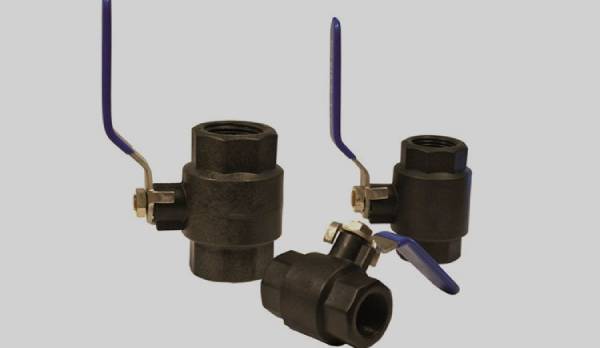
BALL VALVES
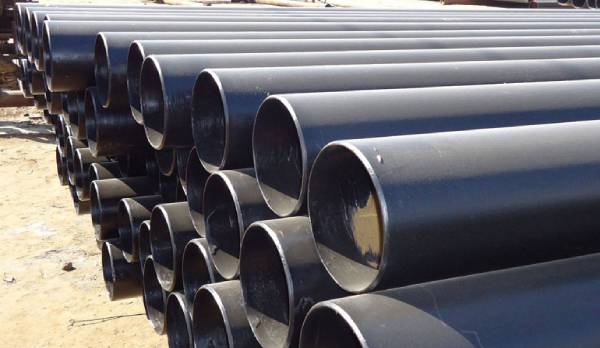
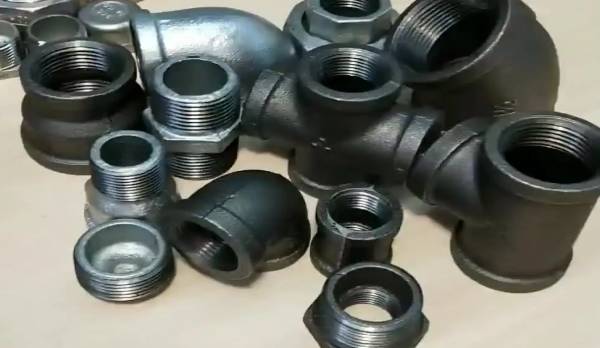
Threaded Fittings
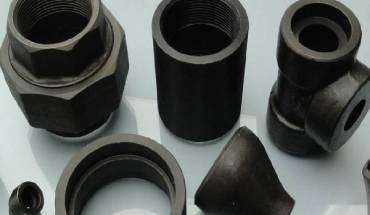
Socket weld Fittings
Technical Data
Types of Carbon Steel and Their Carbon Content
Carbon steel is simply iron with carbon, plus a little manganese, silicon and traces of other elements. The amount of carbon decides almost everything: the more carbon, the harder and stronger the steel gets, and the less ductile and weldable.
| Type | Carbon content | Character | Typical uses |
|---|---|---|---|
| Low carbon (mild steel) | Up to about 0.30% | Soft, ductile, easy to weld and form | Pipes, plates, structures, wire, sheet metal |
| Medium carbon | About 0.30% – 0.60% | Stronger and tougher, can be heat treated | Shafts, gears, axles, crankshafts, forgings |
| High carbon | About 0.60% – 1.00% | Very hard, wear resistant, less ductile | Springs, blades, cutting tools, rails |
| Ultra-high carbon | Above about 1.00% | Extremely hard and brittle | Specialist tools and wear parts |
Most piping products (pipe, flanges, fittings) use low to medium carbon grades, because welding and toughness matter more than extreme hardness.
Common Piping Grades and Standards
| Grade | Standard | Product | Notes |
|---|---|---|---|
| A106 Gr B / C | ASTM A106 | Seamless pipe | High-temperature service |
| A53 Gr B | ASTM A53 | Seamless and welded pipe | General utility service |
| API 5L Gr B | API 5L | Line pipe | Oil, gas and water pipelines |
| A333 Gr 6 | ASTM A333 | Seamless and welded pipe | Low-temperature service |
| A105 | ASTM A105 | Forged flanges and fittings | Standard for forged piping parts |
| A234 WPB | ASTM A234 | Butt weld fittings | Matches A106 Gr B pipe |
| A350 LF2 | ASTM A350 | Low-temperature forgings | Impact tested |
| A516 Gr 70 | ASTM A516 | Pressure vessel plate | Boilers and vessels |
| A36 | ASTM A36 | Structural plate and sections | General construction |
Chemical Composition of Carbon Steel Grades (A106, A105, A53)
| Grade | Carbon | Manganese | Phosphorus | Sulphur | Silicon |
|---|---|---|---|---|---|
| A106 Gr B | 0.30 | 0.29 – 1.06 | 0.035 | 0.035 | 0.10 min |
| A106 Gr C | 0.35 | 0.29 – 1.06 | 0.035 | 0.035 | 0.10 min |
| A53 Gr B | 0.30 | 1.20 | 0.05 | 0.045 | – |
| A105 | 0.35 | 0.60 – 1.05 | 0.035 | 0.040 | 0.10 – 0.35 |
| A234 WPB | 0.30 | 0.29 – 1.06 | 0.050 | 0.058 | 0.10 min |
| A333 Gr 6 | 0.30 | 0.29 – 1.06 | 0.025 | 0.025 | 0.10 min |
| A350 LF2 | 0.30 | 0.60 – 1.35 | 0.035 | 0.040 | 0.15 – 0.30 |
| A516 Gr 70 | 0.31 max (by thickness) | 0.79 – 1.30 | 0.035 | 0.035 | 0.13 – 0.45 |
Carbon Steel Pipe Sizes and Weight, Schedule 40
| NPS | OD (mm) | Wall, Sch 40 (mm) | Weight (kg/m) |
|---|---|---|---|
| 1/2" | 21.3 | 2.77 | 1.27 |
| 1" | 33.4 | 3.38 | 2.50 |
| 2" | 60.3 | 3.91 | 5.44 |
| 3" | 88.9 | 5.49 | 11.29 |
| 4" | 114.3 | 6.02 | 16.07 |
| 6" | 168.3 | 7.11 | 28.26 |
| 8" | 219.1 | 8.18 | 42.55 |
| 10" | 273.1 | 9.27 | 60.29 |
| 12" | 323.9 | 10.31 | 73.88 |
Weights are theoretical for carbon steel at 7.85 g/cm³. Permitted tolerance under ASTM A106 and A53 applies to actual delivered weight.
Carbon Steel Equivalent Grades
| ASTM grade | Nearest EN / DIN equivalent | Note |
|---|---|---|
| A105 | EN 10222-2 P250GH (1.0460) / DIN C22.8 | Forged flanges and fittings |
| A106 Gr B | EN 10216-2 P265GH (1.0425) | Seamless pipe |
| A516 Gr 70 | EN 10028-2 P355GH (1.0473) | Pressure vessel plate |
Equivalents are nearest matches, not identical. Confirm the specification with the project engineer before substitution.
Physical Properties and Pipe Weight of Carbon Steel
| Property | Typical value |
|---|---|
| Density | About 7,850 kg/m³ (7.85 g/cm³) |
| Melting range | About 1,425 – 1,540 °C |
| Modulus of elasticity | About 200 GPa |
| Thermal conductivity | About 45 – 52 W/m·K |
| Thermal expansion | About 11 – 12 µm/m·°C |
| Practical service temperature in air | Up to about 425 °C for A106 Gr B (creep and scaling limit beyond) |
Density is what pipe weight is worked out from. For example, a 6" NB Schedule 40 A106 pipe weighs about 28.26 kg per metre.
Carbon Steel Applications by Industry
| Industry | Typical applications | Usual products |
|---|---|---|
| Oil and gas | Pipelines, gathering lines, wellhead piping, refinery units | API 5L and A106 pipe, A105 flanges, gate and globe valves |
| Power generation | Boiler feed water, steam, condensate and cooling water lines | A106 Gr B / C pipe, A234 WPB fittings |
| Petrochemical and chemical | Process piping for non-corrosive hydrocarbons and utilities | Pipes, flanges, fittings, valves |
| Water and wastewater | Water mains, treatment plant piping, fire-fighting systems | A53 pipe, flanges, check valves |
| Construction and infrastructure | Structural frames, bridges, piling, scaffolding | A36 plate, A53 pipe |
| Shipbuilding and heavy engineering | Hull sections, ballast lines, pressure vessels | Plate, pipe, forgings |
| Low-temperature and cold-climate service | Low-temperature process lines | A333 Gr 6 pipe, A350 LF2, A420 WPL6 |
| General manufacturing | Machinery parts, shafts, gears, fasteners | Bars, forgings, bolts |
Carbon steel is not suited to every fluid. It corrodes in wet or acidic service and handles chlorides poorly, so for those duties specify stainless steel, duplex or a nickel alloy.
Carbon Steel vs Alloy Steel vs Stainless Steel
| Criteria | Carbon steel | Alloy steel | Stainless steel |
|---|---|---|---|
| Main elements | Iron and carbon | Iron, carbon plus chromium, molybdenum and others | Iron with 10.5%+ chromium (often nickel) |
| Corrosion resistance | Low, needs coating or lining | Moderate | High |
| Strength | Good | Higher, especially at temperature | Good to high |
| High-temperature use | Up to about 425 °C | Well above 425 °C (P11, P22, P91) | Grade-dependent, up to 800 °C+ |
| Weldability | Excellent | Good, with preheat | Good |
| Magnetic | Yes | Yes | Depends on grade (304 and 316 are not) |
| Cost | Lowest | Moderate | Highest of the three |
| Best for | Oil, gas, water, steam, structures | High-temperature steam and refinery lines | Corrosive, hygienic and marine duty |
Which should you pick? If the fluid is non-corrosive and temperatures are moderate, carbon steel is nearly always the most economical. For hot steam or hydrogen service, look at alloy steel, such as alloy steel P22 pipes. For corrosive media, look at stainless steel products.
Carbon Steel Certifications and Test Documentation
| Document or standard | What it covers |
|---|---|
| Mill test certificate, EN 10204 3.1 | Heat number, chemistry and mechanical results |
| EN 10204 3.2 (on request) | Certificate countersigned by an independent inspector |
| Hydrostatic test report | Pressure test results |
| NACE MR0175 / ISO 15156 | Sour-service compliance, where specified |
| ASTM, ASME and API standards | A106, A53, A333, A105, A234, A350, A516, API 5L, B16.5, B16.9, B16.11, B36.10M |
| Third-party inspection | Arranged with your nominated agency |
9001:2015 certified · [PED 2014/68/EU, if held] · [IBR approval, if held] · [year] years in business · exporting to [number] countries
Carbon Steel Pipes, Flanges, Fittings, Valves & Fasteners We Supply
Carbon steel pipes and tubes
The backbone of process, utility and pipeline systems. See our full range of carbon steel pipes and tubes. We stock ASTM A106 Gr B and C seamless pipe for high-temperature service, ASTM A53 Gr B pipe for general utility and water lines, and ASTM A333 Gr 6 pipe for low-temperature duty
Carbon steel flanges
Weld neck, slip-on, blind, socket weld, threaded and lap joint flanges in ASME B16.5 classes 150 to 2500. Browse our full range of carbon steel flanges range, including class 150 weld neck, class 300 slip-on, class 600 blind and API 6A weld neck and blind flanges.
Butt weld pipe fittings
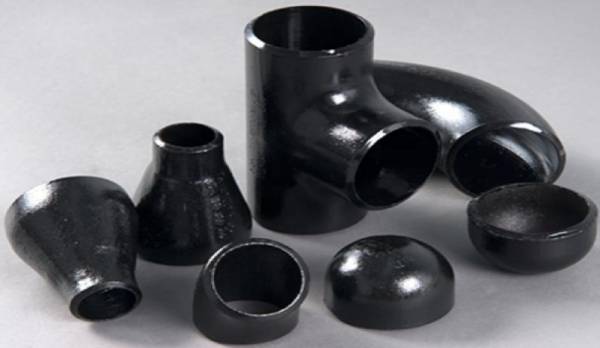
Elbows, tees, reducers, caps and stub ends in A234 WPB carbon steel pipe fittings. For cold service, see our LTCS A420 WPL3 and WPL6 fittings.
Forged fittings
Small-bore connections in ASTM A105: socket weld fittings and threaded fittings. Low-temperature versions are available as A350 LF2 socket weld and A350 LF2 threaded fittings.
Carbon steel valves
Isolation and control for oil, gas, steam and water lines: cast steel gate valves, forged gate valves, cast steel globe valves, forged globe valves, angle type globe valves, check valves, knife edge gate valves and monoflange valves. For instrument lines, see our A105 carbon steel instrumentation ball valves.
Carbon steel fasteners
Studs, bolts and nuts with the coatings that carbon steel needs outdoors: hot-dip galvanized fasteners, Xylan coated fasteners and PTFE (Teflon) coated fasteners. We also supply DIN carbon steel fasteners.
Plates, round bars and special items
Carbon steel plates and sheets, round bars, pipe spools, long radius bends, wire mesh and perforated sheet are available on request [confirm stock]. Send us your drawing or size list and we will check availability.
Carbon Steel Quality Control and Testing at Aashish Metals
Carbon steel grades can look identical from the outside. An A106 Gr B pipe and an A53 pipe are hard to tell apart by eye, so we don’t rely on eyes.
flowchart LR
A[Your enquiry] –> B[Grade and spec check]
B –> C[Sourcing from approved mills]
C –> D[Incoming inspection]
D –> E[Cutting and preparation]
E –> F[Final check and packing]
F –> G[Dispatch with MTC]
- Grade and spec check. We confirm the grade, standard, schedule, size and end type before quoting.
- Approved sourcing. Billets, hot-rolled coil and forgings come from approved mills, and each heat stays traceable through to your delivery.
- Incoming inspection. We check dimensions, wall thickness, surface, markings and chemistry (PMI or spectro test) on every lot.
- Cutting and preparation. Cutting to length, bevelling, threading or spool fabrication as your drawing requires.
- Testing on request. Hydrostatic test, ultrasonic and dye-penetrant testing, impact testing for low-temperature grades, and hardness testing, as your specification asks.
- Coating and packing. Black, varnished, epoxy or galvanized finish, capped ends, and export-worthy packing marked with grade and heat number.
Carbon Steel Products – FAQ’s
Carbon steel is an iron-carbon alloy with up to about 2% carbon, plus a little manganese and silicon. It has no added chromium or nickel like stainless steel does. It’s the most widely used steel in the world because it’s strong, easy to weld and low in cost.
There are four: low carbon (up to 0.30% carbon, soft and easy to weld), medium carbon (0.30% to 0.60%, stronger and heat-treatable), high carbon (0.60% to 1.00%, very hard) and ultra-high carbon (above 1.00%, extremely hard). Piping products mostly use low and medium carbon grades.
A106 is seamless only and made for high-temperature service, so it’s the usual pick for steam and hot process lines. A53 comes as seamless or welded and is aimed at general utility and water lines. Their strength is similar, but A106 has tighter chemistry.
It depends on the job. Carbon steel is cheaper and strong enough for most piping duty, so it’s the better choice for non-corrosive fluids like oil, gas, steam and water. Stainless steel wins where corrosion, hygiene or chlorides are a concern, but it costs more.
Yes, if it’s left unprotected in moisture and oxygen. That’s why carbon steel is usually painted, coated, galvanized or lined, and why it isn’t recommended for acidic or chloride-heavy fluids. In dry or oil-filled service, it lasts for decades.
For More Information About Carbon Steel Products please call +91-22-66362223 / 66394926 or send an email to export@aashishmetal.com
Export Country
MIDDLE EAST Saudi Arabia | AFRICA Nigeria NORTH AMERICA Usa | EUROPE Russia | ASIA India SOUTH AMERICA Argentina |
Products
Please feel free to contact us. We will get back to you with 2 business days. Or just call us now.