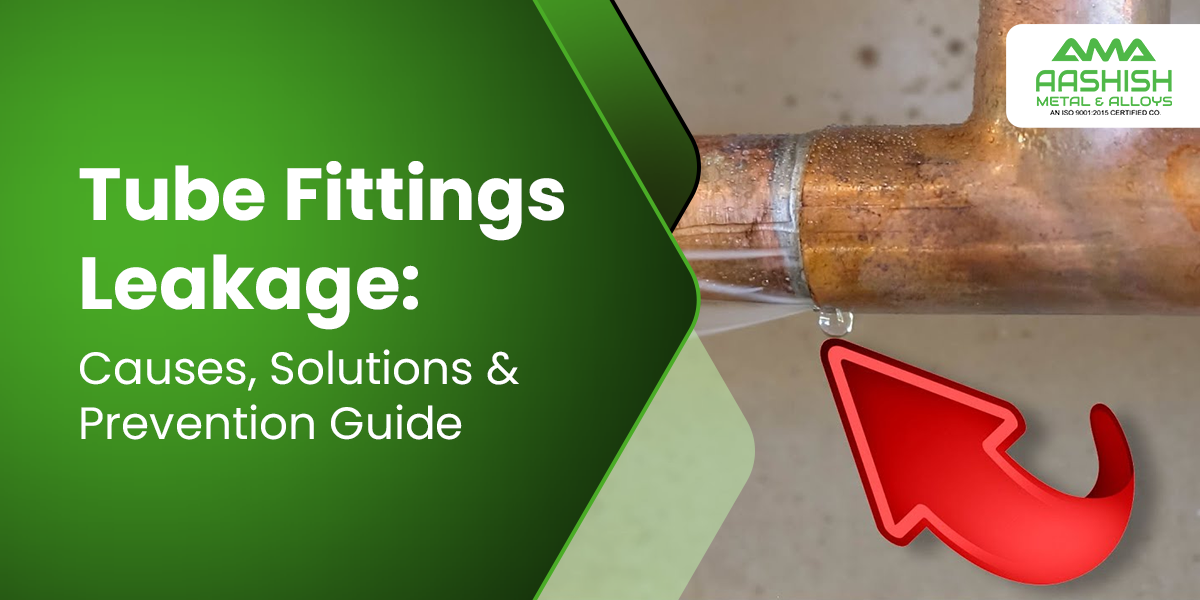
One of the most disruptive and expensive issues that engineers and plant maintenance staff deal with in various industries is a leak in a tube fitting. In both oil and gas, pharmaceuticals, chemical processing and power generation, even a small instrumentation fittings leakage may cause unplanned shutdowns and safety risks at work, as well as expensive financial setbacks.
The positive aspect here is that tube fittings leakages can be avoided in the majority of cases. With a bit of knowledge about the underlying causes, the relevant fix, and a well-thought out prevention plan, you can make sure that your fluid systems are leak free and operating as intended.
This manual discusses the most prevalent tube fittings leakage causes, step by step approach on how to fix tube fitting leaks and best practices that can ensure that such leakages do not recur. If you are also looking to understand the full range of fitting types and selection criteria, visit the Instrumentation Tube Fittings Complete Guide for a detailed reference.
Common Causes of Tube Fittings Leakage
Understanding why tube fittings leak is the first step toward solving the problem. The following are the most frequently identified causes across industrial installations.
1. Improper Installation
The most common cause of compression tube fittings leaks is incorrect assembly. Examples of common installation errors are:
- Failure to insert the tube into the fitting body to tighten the nut.
- Inability to turn more than the recommended number of times after hand tight and getting the ferrule bite incomplete.
- Cross threading the compression nut and breaking the thread, making the seal weak.
- Failing to line up the tube and attaching the body prior to tightening, resulting in an uneven seat of the ferrule.
To understand how single and double ferrule designs behave during installation, refer to the Tube Fittings vs Instrumentation Tube Fittings guide which explains the sealing mechanism in detail.
2. Over Tightening or Under Tightening
Tightening is a balance. Both extremes lead to leakage:
- Over tightening distorts the ferrule and deforms the tube OD, which prevents a uniform metal to metal seal and can cause micro cracks at the contact point
- Under tightening leaves gaps between the ferrule and fitting cone, allowing process fluid to escape under pressure
Always follow the manufacturer specified torque values and use the recommended number of wrench turns past hand tight, typically 1.25 turns for a fresh installation.
3. Worn or Damaged Ferrules
Ferrules are the core sealing component in any compression tube fitting. Over time and through repeated make and break cycles, ferrules can:
- Develop surface scratches that interrupt the seal contact surface
- Lose their spring like grip on the tube OD
- Crack under excessive torque or thermal stress
Reusing ferrules beyond their recommended service life is one of the most overlooked causes of compression fitting leak. Always replace ferrules when reassembling a connection.
4. Tube Surface Defects and Poor Preparation
The tube end condition plays a critical role in achieving a leak free joint. Common tube preparation errors include:
- Cutting the tube at an angle rather than square, which prevents the ferrule from seating evenly
- Leaving burrs on the tube end after cutting, which scores the ferrule surface and creates leak paths
- Using tubes with scratches, pits, or oval cross sections that prevent uniform contact with the ferrule
Always cut the tube square using a tube cutter, then deburr both the inside and outside of the cut end before assembly.
5. Vibration and Thermal Cycling
Industrial environments subject tube fittings to constant vibration and thermal expansion and contraction cycles. Over time, these forces can:
- Loosen the compression nut progressively
- Fatigue the ferrule material, causing micro fractures
- Alter the geometry of the fitting body, breaking the metal seal
Double ferrule designs from high performance grades such as SS 316 Tube Fittings are specifically engineered with a rear ferrule that resists vibration induced loosening, making them the preferred choice in dynamic environments.
6. Corrosion and Chemical Incompatibility
Selecting a fitting material that is incompatible with the process fluid is a common and often overlooked cause of leakage. Corrosion gradually attacks the sealing surfaces, leading to pitting and eventual breach of the seal. Stainless steel grades such as SS 316L, duplex steel, Inconel, and Hastelloy are available to handle aggressive media.
How to Fix a Tube Fitting Leak: Step by Step
If you are dealing with an active instrumentation fittings leakage, follow these steps in order to safely diagnose and resolve the issue.
- Isolate and depressurize the system. Never attempt to work on a fitting under live pressure. Shut off the fluid supply and bleed down the line.
- Identify the exact leak point. Check whether the leak originates from the ferrule bite zone, the thread interface, or the body of the fitting. Use a dry cloth to wipe the area clean, then repressurize briefly if safe to confirm the source.
- Loosen the compression nut carefully. Use two wrenches, one to hold the fitting body and one to turn the nut, to avoid torquing the line.
- Inspect the ferrule and tube end. Look for visible scoring, cracking, or incomplete bite marks on the ferrule. Inspect the tube OD for scratches or ovality.
- Replace the ferrule if damaged. Do not attempt to reuse a deformed or scratched ferrule. Fit a new ferrule set and reinsert the tube fully into the fitting body.
- Reassemble following the correct make up procedure. Turn the nut hand tight, then use a wrench to advance it one quarter turn beyond snug. Do not over tighten during a remake.
- For thread leaks, check and reapply PTFE tape clockwise on tapered threads. Straight threads rely on an O ring or gasket, not tape.
- Slowly repressurize and inspect for leaks. If the leak persists after a remake, replace the fitting body and tube end entirely.
For a wider range of fitting configurations suitable for high pressure or special media applications, explore the Special Instrumentation Fittings range available from Aashish Metals.
Prevention Tips to Avoid Tube Fittings Leakage
Prevention is always more cost effective than repairs. The following practices help maintain leak free performance over the long term:
- Always prepare tube ends properly: cut square, deburr, and inspect before every assembly
- Follow the fitting manufacturer’s make up procedure, including the exact number of wrench turns specified for first time installation and for remakes
- Never reuse ferrules after disassembly in high pressure or critical service applications
- Select fitting materials that match both the process fluid chemistry and the operating temperature and pressure range
- Use double ferrule compression fittings in systems subject to vibration, thermal cycling, or pressure surges
- Establish a periodic inspection schedule to detect early signs of leakage such as staining, corrosion deposits, or pressure drops in the line
- Ensure that all technicians performing fitting installations receive hands on training before working on live systems
- Cap or plug unused ports to prevent contamination and protect sealing surfaces
Choosing the right fitting from the start significantly reduces leakage risk. Browse the complete Tube Fittings product range at Aashish Metals to find the correct specification for your application.
Frequently Asked Questions
Most frequently is improper installation, or unfinished tube insertion or incorrect ferrule make up torque. Even slight variations in the procedure suggested may lead to an insufficient ferrule bite and leakage of process fluid. The manufacturer instructions should always be adhered to in assembling the device and calibrated wrenches should be used to achieve uniform results.
In many cases, yes. In case the tube end and the ferrule are not damaged, a loosening and re-tightening of the nut at the proper torque will reseal it. But when the ferrule begins to deform visibly, score, and/or crack, or when the tube surface is scratched, the ferrule and the tube portion should be changed. In trying to reuse damaged parts, repeat leakage is usually encountered.
In high vibration systems, the fittings of the ferrule tube are preferred to be in form of double ferrule tube. The rear ferrule works separately to cling to and retain the tube and the front ferrule is what offers the seal. This division of labor causes vibration not to weaken the seal with time. Other grades like SS 316 or duplex steel have an extra advantage of resisting fatigue in the demanding process conditions.
When the fitting body threads are damaged or corroded, the fitting body cone has deep scored, the fitting has been over tightened to the extent of deforming the body or due to repeated attempts at getting a leak free joint having failed to do so then a full replacement is required. The safest option is always to replace in critical instrumentation or high pressure lines when doubt is present on fitting integrity.
Trust Aashish Metals for your Tube Fittings Requirements
Tube fittings leakage is a problem that disrupts operations, increases maintenance costs, and poses real safety risks in industrial facilities. The good news is that the overwhelming majority of leaks result from identifiable and preventable causes: poor tube preparation, incorrect make up torque, reused ferrules, vibration fatigue, or incompatible materials.
By applying the step by step repair method and committing to the prevention practices outlined in this guide, engineers and maintenance teams can achieve consistently leak free installations. When selecting new tube fittings, choose a supplier who combines manufacturing precision with material traceability and technical support.
Aashish Metals supplies a complete range of compression tube fittings, instrumentation fittings, and special alloy fittings manufactured to international standards and exported to over 52 countries. For specifications, datasheets, and expert guidance, visit the Instrumentation Tube Fittings Overview or contact the Aashish Metals team directly.