Check Valve Manufacturer & Supplier in India
High-Quality Non Return Valves (NRV) in SS 304, SS 316, Carbon Steel, Brass & PVC — Swing, Wafer, Dual Plate, Ball, Pilot Operated & More
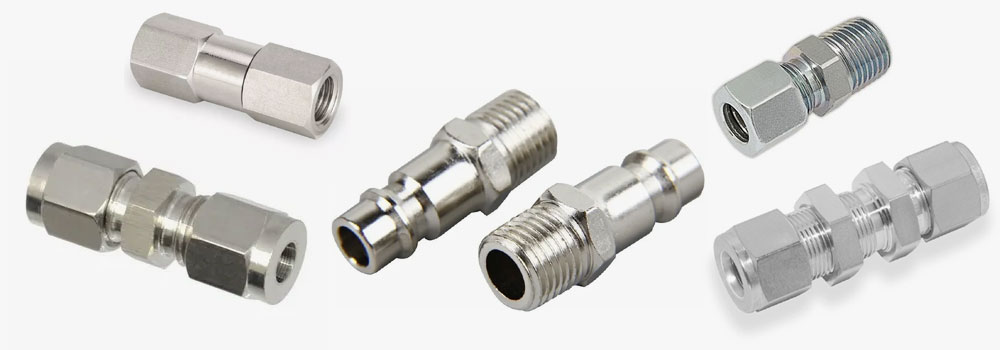
A check valve is also called a non return valve (NRV) or a one-way valve is one of the most essential and yet most often overlooked components in any fluid handling system. It does one job quietly and without external control: it lets fluid flow in one direction and blocks it when it tries to reverse. Without it, pumps cavitate, pipelines water hammer, and process equipment faces serious damage from backflow.
Aashish Metals is a manufacturer and supplier of a comprehensive range of check valves designed for water supply, oil & gas, chemical processing, HVAC, and industrial applications across India and internationally. Our range includes swing check valves, wafer check valves, dual plate check valves, spring loaded check valves, ball check valves, pilot operated check valves, and more all available in stainless steel, carbon steel, brass, and PVC.
Every valve we supply carries full material traceability with EN 10204 3.1 Material Test Certificates and is manufactured to ANSI, BS, and DIN standards. Whether you need a single replacement unit or a project-quantity order, our team is ready to match the right valve to your application, pressure class, and budget.
Browse our check valves supplier page or request a quote below.
- Material Specification Chart Of Check Valves
- Check Valves Quality and Test reports
- Check Valves Surface Coating
- Material of Construction for Check Valves
- Related Types Of Check Valves
- Threaded Check Valve Dimension
- Socket-Connect Check Valves Dimensions
- For Check Valves price list
- We supply of variety Check Valves
- Application Of Check Valves
What Is a Check Valve?
A check valve (also known as a non return valve, NRV, backflow preventer, or one-way valve) is a self-actuating valve that permits fluid — liquid or gas — to flow in only one direction. It opens automatically when the upstream pressure exceeds the downstream pressure (or the spring force in spring-loaded types), and it closes automatically when the flow reverses or pressure equalizes.
Unlike gate valves, ball valves, or globe valves, a check valve requires no external actuator, no handle, and no control signal. It is entirely pressure-driven, making it one of the simplest and most reliable components in a piping system.
How a Check Valve Works
- Forward Flow: Upstream pressure pushes against the closing element (disc, ball, or flap). Once pressure exceeds the cracking pressure, the element lifts or rotates open and fluid flows through.
- Reverse Flow / No Flow: When upstream pressure drops or flow reverses, the closing element returns to its seat — by gravity, spring force, or the reverse pressure itself — sealing the valve and preventing backflow.
- Cracking Pressure: The minimum differential pressure required to open the valve. Different designs have different cracking pressures; spring-loaded types have a defined, adjustable cracking pressure while swing types rely mainly on gravity.
NRV vs Check Valve — Are They the Same?
Yes. NRV (Non Return Valve) and check valve are the same device — the name simply varies by region and industry. In India, the term NRV is most widely used in water supply and plumbing. In oil & gas and process industries, “check valve” is the standard term. Both refer to a valve that prevents reverse flow.
| Term | Same Device? | Common In |
|---|---|---|
| Check Valve | Yes | Oil & Gas, Process, Industrial |
| Non Return Valve (NRV) | Yes | Water, Plumbing, Pumping |
| One Way Valve | Yes | HVAC, Pneumatic, Hydraulic |
| Backflow Preventer | Yes (broader category) | Plumbing, Potable Water |
| Anti-Siphon Valve | Yes | Irrigation, Water Supply |
Types of Check Valves We Supply
Aashish Metals supplies all major check valve types across a full range of materials, pressure classes, and end connections. Here is a practical overview of each type:

Swing Check Valve
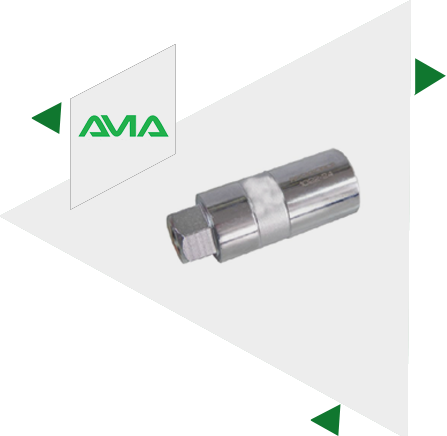
Inline Check Valve
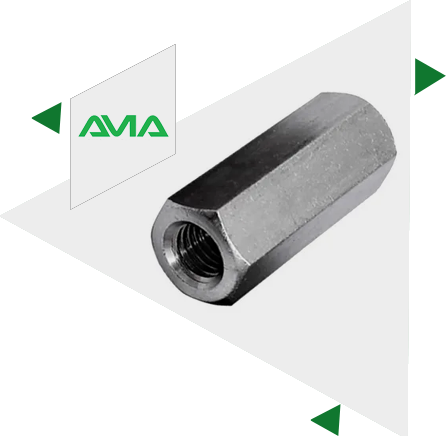
Hydraulic Check Valve
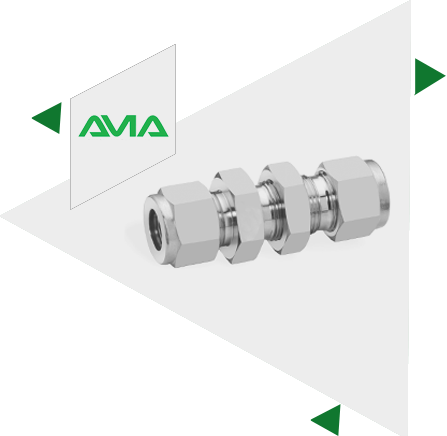
Instrumentation Check Valve

Poppet Check Valve
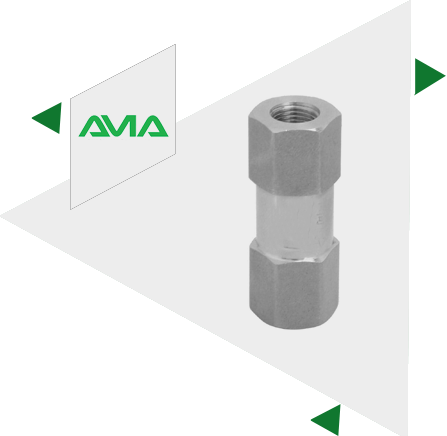
Threaded Check Valve
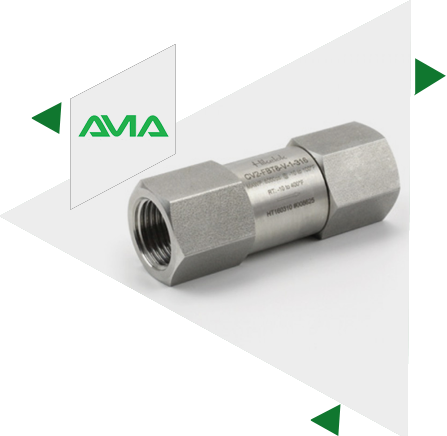
Non Return Check Valve
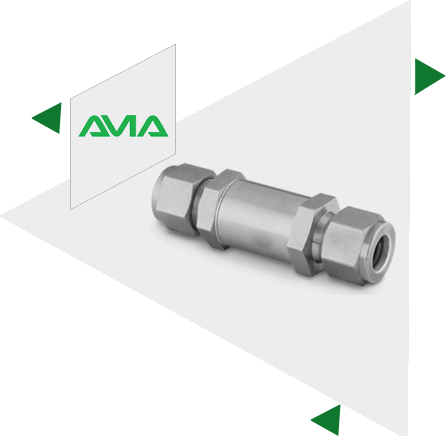
Swagelok Check Valve
Swing Check Valve
The swing check valve is the most widely used type in water supply, fire protection, and general-purpose pipeline applications. It uses a hinged disc (the “clapper”) that swings open with forward flow and swings back onto its seat when flow stops or reverses.
- How it works: The disc is mounted on a hinge pin and pivots freely. Forward flow pushes it fully open (low pressure drop). Reverse flow or gravity closes it.
- Best for: Water pipelines, sewage lines, pump discharge lines, fire fighting systems.
- Limitation: Vulnerable to water hammer in high-velocity applications because the disc closes suddenly.
Wafer Check Valve
The wafer check valve is a compact, lightweight design that fits between two flanges without needing full face flanges. Its thin body saves significant space and weight, making it ideal for installations where pipe support loads matter.
- Best for: HVAC, water treatment plants, compact piping systems.
- Sizes: DN50 to DN600 (2″ to 24″).
Dual Plate Check Valve (Dual Disc)
The dual plate check valve uses two spring-loaded semicircular plates instead of a single disc. The two plates are held open by a central hinge spring and snap shut rapidly when flow reverses — significantly reducing water hammer compared to a swing check valve.
- Best for: High-velocity pipeline systems, compressor discharge, petroleum pipelines.
- Sizes: DN50 to DN1200.
Ball Check Valve
A ball check valve uses a spherical ball as the closing element. Forward pressure lifts the ball off the seat; reverse flow pushes it back onto the seat. Simple, low-maintenance, and especially effective with slurries and viscous fluids.
- Best for: Sewage, slurry lines, food processing, chemical dosing pumps.
Spring Loaded Check Valve (Lift Check Valve)
A spring loaded check valve uses a spring to hold the closing element (piston or disc) against the seat. It opens when forward pressure exceeds the spring pre-load (cracking pressure) and closes instantly when flow drops.
- Best for: Vertical pipelines, compressor systems, pneumatic and hydraulic circuits.
- Advantage: Works in any orientation; no reliance on gravity to close.
Pilot Operated Check Valve
A pilot operated check valve is a hydraulic check valve that can be remotely unlocked to allow reverse flow when required. It prevents load drift in hydraulic cylinders and is commonly used in lifting and mobile hydraulic equipment.
- Best for: Hydraulic circuits, actuators, mobile machinery, press systems.
Duckbill Check Valve
A duckbill check valve uses a flexible rubber sleeve that opens like a duck’s bill under forward flow and collapses shut against reverse flow. It has no moving metal parts and is ideal for corrosive or marine environments.
- Best for: Marine outfalls, sewage outfalls, chemical drains.
Inline / Axial Flow Check Valve
An inline check valve (also called an axial flow check valve) has the closing element moving along the flow axis, giving it a very low pressure drop. It handles high flow velocities without chatter.
- Best for: Gas pipelines, compressor stations, offshore.
Check Valve Types at a Glance
| Type | Closing Element | Cracking Pressure | Water Hammer Risk | Best Application |
|---|---|---|---|---|
| Swing Check | Hinged disc | Low | Moderate-High | Water supply, pumps |
| Wafer Check | Twin plates / disc | Low | Low-Moderate | HVAC, compact systems |
| Dual Plate | Spring-loaded plates | Low-Medium | Very Low | High-velocity pipelines |
| Ball Check | Spherical ball | Low | Low | Slurry, sewage, chemical |
| Spring Loaded | Piston/disc + spring | Adjustable | Very Low | Any orientation, pneumatic |
| Pilot Operated | Piston + pilot | Adjustable | N/A | Hydraulic cylinders |
| Duckbill | Rubber sleeve | Very Low | None | Marine, outfall |
| Inline Axial | Spring poppet | Low | Very Low | Gas, high-velocity |
Technical Data
Check Valves Technical Specifications
Aashish Metals supplies check valves across a wide range of sizes, pressure classes, and material grades. Standard and custom configurations are available.
| Parameter | Standard range |
|---|---|
| Size range | 1/4" to 48" (DN6 to DN1200) |
| Pressure class | PN10 – PN400 / ANSI Class 150 – Class 2500 |
| Body material | Carbon Steel (A216 WCB), SS 304, SS 316, SS 316L, Brass, PVC, CPVC |
| Seat / disc material | SS 304, SS 316, Stellite, PTFE, NBR, EPDM |
| Seal material | NBR, EPDM, FKM (Viton), PTFE |
| End connection | Flanged (RF/FF), Threaded (BSP/NPT), Wafer, Butt Weld |
| Operating temperature | -20 °C to +450 °C (depending on material) |
| Flow direction | Unidirectional (vertical or horizontal, depending on type) |
| Face-to-face | As per API 594, ASME B16.10, BS EN 558 |
Check Valves Applicable Standards
| Standard | Application |
|---|---|
| API 594 | Wafer / Lug / Double Flanged Check Valves |
| API 6D | Pipeline Check Valves |
| ASME B16.34 | Flanged & Welded Valves |
| BS EN 12334 | Industrial Check Valves |
| DIN 3202 | Face-to-Face Dimensions |
| ASTM A216 WCB | Carbon Steel Casting |
| ASTM A351 CF8M | SS 316 Casting |
| EN 10204 3.1 / 3.2 | Material Test Certificate |
| ISO 9001:2015 | Quality Management System |
Pressure-Temperature Rating (Indicative)
| Body material | Class / rating | Max. temp. |
|---|---|---|
| Carbon Steel (A216 WCB) | Class 150 – Class 600 | Up to 425 °C |
| SS 316 / CF8M | Class 150 – Class 300 | Up to 450 °C |
| SS 304 / CF8 | Class 150 – Class 300 | Up to 425 °C |
| Brass | PN16 – PN25 | Up to 150 °C |
| PVC / CPVC | PN10 – PN16 | Up to 60 °C (PVC) / 100 °C (CPVC) |
Custom Specifications Available: Aashish Metals can supply check valves with special trims, exotic alloy bodies (Duplex, Inconel, Hastelloy), fire-safe designs, or fugitive emission testing per customer requirements.
Check Valves Material Grade Comparison
The body, disc, and seat material of a check valve must be compatible with the process fluid, operating temperature, and pressure class. Choosing the wrong material is one of the leading causes of premature check valve failure.
| Material | ASTM grade | Max. temp. | Corrosion resistance | Best for |
|---|---|---|---|---|
| Carbon Steel | A216 WCB | 425 °C | Moderate (requires coating for wet service) | Oil, gas, steam, non-corrosive fluids |
| Stainless Steel 304 | A351 CF8 | 425 °C | Good | Water, food, mild chemicals |
| Stainless Steel 316 | A351 CF8M | 450 °C | Excellent (pitting & crevice) | Marine, chemical, pharmaceutical |
| Stainless Steel 316L | A351 CF3M | 450 °C | Excellent + weld resistant | Aggressive chemicals, high-purity |
| Duplex S31803 | A890 Gr. 4A | 300 °C | Superior (chloride) | Seawater, offshore, sour service |
| Brass | — | 150 °C | Good (non-ferrous) | Potable water, low-pressure gas |
| PVC / CPVC | — | 60 °C / 100 °C | Excellent (most acids/alkalis) | Chemical dosing, water treatment |
| Inconel 625 | A494 CW-6MC | 1,000 °C | Outstanding (all corrosives) | Extreme chemical and thermal service |
| Hastelloy C276 | A494 CX-2MW | 650 °C | Outstanding (acids, wet chlorine) | Strong acids, chlorine service |
Check Valves Trim Material Options
| Component | Standard material | Optional materials |
|---|---|---|
| Disc / clapper | SS 316 | Stellite, Monel, Alloy 20 |
| Seat ring | SS 316 | PTFE, Stellite, Inconel |
| Hinge pin | SS 316 | Duplex, Inconel |
| Spring (if applicable) | SS 316 | Inconel 718, Hastelloy |
| Seals / O-rings | NBR | EPDM, FKM (Viton), PTFE |
Related Products from Aashish Metals: Need the pipe, fittings, or flanges to go with your check valves? We supply SS 316L pipe fittings, needle valves, manifold valves, and instrumentation ball valves in matching grades — one supplier for your complete valve and fitting package.
Check Valves Applications & Industries
Check valves (non return valves) are used across virtually every industry where fluids must be moved through pipelines or equipment. Aashish Metals supplies the right valve type and material for each application.
| Industry | Application | Recommended type | Body material |
|---|---|---|---|
| Water Supply & Distribution | Pump discharge protection, pipeline backflow prevention | Swing, Wafer | CS WCB, SS 304, PVC |
| Oil & Gas (Upstream / Midstream) | Wellhead, pipeline, compressor outlet | Dual Plate, Axial | CS WCB, SS 316 |
| Petrochemical & Refinery | Process pipelines, heat exchangers, pump circuits | Dual Plate, Spring Loaded | SS 316L, Duplex |
| Chemical Processing | Acid, alkali, and corrosive fluid lines | Ball, Spring Loaded | SS 316L, PTFE-lined |
| Fire Protection Systems | Sprinkler systems, hydrant networks | Swing | CS, SS 304 |
| HVAC & Building Services | Chilled water, condenser water, heating circuits | Wafer, Swing | CS, Brass |
| Power Generation (Boilers) | Feed water, steam condensate, cooling water | Spring Loaded, Dual Plate | CS, SS 316 |
| Hydraulic Systems | Load holding, actuator circuits, cylinder protection | Pilot Operated | SS 316, Carbon Steel |
| Sewage & Wastewater | Pump discharge, outfall prevention | Swing, Ball, Duckbill | CS, PVC, Rubber |
| Food & Beverage | Hygienic process lines, CIP systems | Sanitary Spring Check | SS 316L |
| Marine & Offshore | Ballast systems, sea water pipelines | Wafer, Swing | SS 316L, Bronze |
| Pharmaceutical | Sterile fluid transfer, bioreactor piping | Sanitary check | SS 316L |
Key Application Highlights
- Pump Protection: The most common use of a non return valve is on the discharge side of a pump to prevent backflow when the pump shuts down — protecting the impeller from reverse spin and water hammer.
- Compressor Outlet: Dual plate and spring loaded check valves on compressor outlets prevent reverse gas flow when the compressor stops or surges.
- Hydraulic Load Holding: Pilot operated check valves lock hydraulic fluid in cylinders to prevent load drift when no hydraulic pressure is applied — critical in crane, press, and lifting equipment safety.
- Water Hammer Prevention: Spring loaded and dual plate designs close before reverse momentum builds, protecting pipeline joints and fittings from pressure surge damage.
Business Benefits of Sourcing from Aashish Metals
- Competitive check valve price across all grades with transparent, documented quotations
- Stock availability for standard sizes in CS WCB, SS 316, and brass — ready for fast dispatch
- Technical selection support: our team reviews your P&ID or datasheet and recommends the correct valve type, rating, and material
- Export packaging for international shipments with full documentation (COA, MSDS, packing list, COO)
- Long-term supply partnerships for EPC contractors and maintenance teams with blanket order options
How to Select the Right Check Valve
With dozens of designs, materials, and pressure ratings available, selecting the correct check valve for your system is a critical engineering decision. A mismatch leads to water hammer, premature wear, reverse flow contamination, or complete system failure. Here is a practical buying guide to help you get it right the first time.
Step 1 — Define Your Process Parameters
Before comparing products, collect the following data from your process design documents:
| Parameter | What to Specify | Why It Matters |
|---|---|---|
| Fluid type | Water, oil, gas, chemical, slurry | Determines body material and seal compatibility |
| Flow rate (Cv / Kv) | m³/hr or GPM at operating pressure | Ensures the valve opens fully and does not restrict flow |
| Operating pressure | Bar / PSI at normal and peak conditions | Determines pressure class (PN16, Class 300, etc.) |
| Temperature range | Min / Max °C or °F | Rules out elastomer and plastic options |
| Line size | DN / NPS (e.g., DN50 = 2″) | Dictates end-to-end face-to-face dimension |
| End connections | Flanged, butt-weld, socket-weld, threaded | Matches piping system standard |
| Flow velocity | m/s | Critical for swing check — min. 1 m/s to keep disc open |
Step 2 — Choose the Right Check Valve Type
| If your system has… | Choose this type |
|---|---|
| Horizontal pipeline, general service | Swing check valve |
| Vertical upward flow | Lift check valve or ball check valve |
| Limited face-to-face space | Wafer check valve or dual plate check valve |
| Pump outlet — fast closing needed to prevent water hammer | Dual plate check valve or spring-loaded check valve |
| High-pressure hydraulic circuit | Pilot operated check valve |
| Low-pressure slurry or viscous fluid | Ball check valve or duckbill check valve |
| Potable water / sanitary service | Stainless steel swing check or ball check (NSF-61 certified) |
| Compressor outlet, high-cycle service | Dual plate wafer check valve (low disc inertia) |
Step 3 — Confirm Material Compatibility
Match the body and seal material to your fluid. Refer to the Material Grades section above. Key rules:
- SS 316 / 316L is the most versatile for chemical, pharmaceutical, and marine applications.
- Carbon steel WCB is cost-effective for steam, oil, and non-corrosive gas service.
- Brass suits potable water and low-pressure gas (up to PN16).
- PTFE seats are required for strong acids and alkalis — avoid NBR seals.
- PVC/CPVC should only be considered for temperatures below 60°C / 100°C respectively.
Step 4 — Select Pressure Class and End Connection
| Pressure Class | ANSI Rating | Typical Max. Pressure (bar) | Common Application |
|---|---|---|---|
| PN10 / PN16 | Class 150 | 10–16 bar | Water supply, HVAC, irrigation |
| PN25 / PN40 | Class 300 | 25–40 bar | Industrial process, steam |
| PN100 | Class 600 | ~100 bar | High-pressure process |
| PN250 / PN400 | Class 1500 / 2500 | Up to 420 bar | Oil & gas, subsea, power |
Step 5 — Specify to Applicable Standards
| Pressure Class | ANSI Rating | Typical Max. Pressure (bar) | Common Application |
|---|---|---|---|
| PN10 / PN16 | Class 150 | 10–16 bar | Water supply, HVAC, irrigation |
| PN25 / PN40 | Class 300 | 25–40 bar | Industrial process, steam |
| PN100 | Class 600 | ~100 bar | High-pressure process |
| PN250 / PN400 | Class 1500 / 2500 | Up to 420 bar | Oil & gas, subsea, power |
Why Choose Aashish Metals as Your Check Valve Supplier?
With hundreds of valve distributors and traders operating across India, the difference between a reliable supplier and a risky one comes down to documentation, stock depth, and technical support. Here is how Aashish Metals stands apart.
Our Supply Credentials
| Capability | Aashish Metals | Typical Trader |
|---|---|---|
| Material certifications | EN 10204 3.1 / 3.2 Mill Test Certificates included | Often unavailable or sourced on request |
| Traceability | Full heat & lot traceability from mill to dispatch | Batch mixing common with smaller traders |
| Stock range | DN15 to DN600 across multiple types and grades | Limited to fast-moving sizes only |
| Custom specs | Non-standard pressure class, face-to-face, trim on request | Catalogue-only supply |
| Pressure classes | Class 150 to Class 2500 / PN10 to PN400 | Typically PN10–PN40 |
| Standards compliance | API 594, API 6D, ASME B16.34, IS 5312 | May not confirm standard on invoice |
| Third-party inspection | IBR, Bureau Veritas, SGS, Lloyd’s accepted | Rarely facilitated |
| Delivery timelines | Ex-stock dispatch in 3–7 working days | Dependent on sourcing lead time |
What Our Customers Say Matters Most
Buyers of industrial check valves — EPC contractors, plant engineers, procurement managers — consistently tell us three things drive their supplier choice:
- Correct material certification — A valve without a valid MTR is a liability in any regulated plant. Every Aashish Metals check valve ships with a verifiable EN 10204 3.1 certificate as standard, with 3.2 (third-party inspector-witnessed) available on request.
- Right product, right size, right time — Our warehouse carries swing check valves, dual plate check valves, ball check valves, lift check valves, and wafer check valves from DN15 to DN600 in SS 304, SS 316, SS 316L, and carbon steel WCB. Most standard sizes are dispatched ex-stock.
- Someone who picks up the phone — Our Mumbai-based technical team responds to inquiries within the same business day. Whether you need a datasheet, a material substitution recommendation, or help reading a competitor quote, we are available.
Industry Sectors We Serve
Aashish Metals has supplied check valves, needle valves, manifold valves, and instrumentation ball valves to projects and maintenance teams in:
- Oil & gas (onshore and offshore) — refineries, LNG terminals, FSRU/FPSO vessels
- Petrochemical and chemical processing — reactors, distillation, solvent handling
- Water treatment and desalination plants
- Power generation — thermal, nuclear, hydro auxiliaries
- Pharmaceutical manufacturing — GMP-grade SS 316L with surface finish certification
- Food and beverage processing — sanitary-grade valves with 3-A/EHEDG compliance on request
- Fire protection systems — UL-listed and FM-approved configurations available
- Marine and shipbuilding — class society (DNV, LR, BV) certification facilitated
Pricing and Lead Time
Check valve prices from Aashish Metals are competitive with the Mumbai market and reflect genuine certified material, not unverified grey-market stock. Pricing depends on valve type, size, pressure class, and material grade. We publish indicative price ranges in the pricing section above. For project quantities (10 units and above), contact us for a volume-based quotation. Most standard sizes ship in 3–7 working days from our Mumbai warehouse. Custom or large-bore valves (above DN300) typically require 2–4 weeks production lead time.
Frequently Asked Questions About Check Valves
India has a well-developed check valve manufacturing base, particularly in Mumbai (Maharashtra), Rajkot (Gujarat), and Coimbatore (Tamil Nadu). Leading Indian check valve manufacturers include Aashish Metals, L&T Valves, Kirloskar Brothers, BDK Valves, Sant Cast & Forge, and Ajay Industrial Corporation, among others. Most of these manufacturers produce valves to IS 5312, API 594, and ASME B16.34 standards and export to the Middle East, Africa, Southeast Asia, and Europe. Aashish Metals is a Mumbai-based supplier offering stainless steel and carbon steel check valves with EN 10204 3.1 mill test certificates across DN15 to DN600 and pressure classes from Class 150 to Class 2500.
Check valve prices in India vary significantly based on type, size, material grade, and pressure class. As a general reference:
- Small-bore swing check valves (DN15–DN25, SS 304, PN40): ₹800 – ₹3,500 per piece
- Medium-bore wafer check valves (DN50–DN100, CS WCB, Class 150): ₹2,500 – ₹12,000 per piece
- Large-bore dual plate check valves (DN200–DN300, SS 316, Class 300): ₹25,000 – ₹1,20,000 per piece
- High-pressure lift check valves (DN25, SS 316L, Class 1500): ₹8,000 – ₹35,000 per piece
- Pilot operated check valves (hydraulic, DN25, SS body): ₹18,000 – ₹75,000 per piece
These are indicative prices for certified material with standard documentation. Project quantities (10 units or more) typically attract volume discounts. For an accurate check valve price for your specific requirement, contact Aashish Metals with your size, material, pressure class, and quantity.
The three most common types of check valves used in industrial and commercial piping systems are:
- Swing Check Valve — A hinged disc (clapper) swings open with forward flow and drops shut against a seat when flow stops or reverses. It is the most widely used type for general water, oil, and gas service in horizontal pipelines. Its main limitation is that it requires a minimum flow velocity (typically 1 m/s or more) to stay fully open, making it unsuitable for low-flow or pulsating systems.
- Wafer Check Valve (Dual Plate Check Valve) — A compact, lightweight design with two spring-loaded half-discs that fit between pipe flanges without the need for their own flanges. It closes rapidly — before flow fully reverses — making it the preferred choice for pump discharge lines where water hammer is a concern. Available from DN50 to DN600 and beyond.
- Lift Check Valve — A disc or ball that lifts off its seat under forward flow pressure and drops back to close when pressure drops. It is most effective in vertical pipelines with upward flow and in high-pressure applications such as steam lines and hydraulic circuits. Lift check valves have a higher pressure drop than swing types but are more positive in their closing action.
Other types that are widely used but less commonly grouped as the “three main” include ball check valves, foot valves, pilot operated check valves, and duckbill check valves.
The service life of a check valve depends on the application, fluid type, installation, and maintenance practices. In well-designed systems with clean, non-abrasive fluids at moderate pressures and temperatures:
- Swing check valves in water and HVAC systems typically last 10–20 years before the hinge pin wears or the seat corrodes.
- Dual plate check valves in pump discharge service typically last 8–15 years with the spring being the first component to need replacement (usually at 5–8 years in high-cycle applications).
- Ball check valves in clean fluid service can last 15–25 years as there are no hinge mechanisms to wear.
- Foot valves in submersible pump pits may need replacement every 3–10 years due to sediment and biological fouling.
Factors that shorten check valve life include: incorrect sizing (undersized valves cause high velocity and erosion; oversized valves cause the disc to flutter), water hammer from slow-closing designs, corrosive or abrasive fluids in incompatible body materials, and cavitation at high-pressure drops.
Proper material selection — for example, choosing SS 316 instead of carbon steel for a corrosive chemical service — can double or triple service life. Aashish Metals’ technical team can recommend the right check valve specification to maximise service life for your operating conditions.
Check valve failure is one of the most common causes of pump damage, pipe bursts, and reverse flow contamination in industrial plants. The root causes fall into five categories:
- Incorrect sizing — The single biggest cause of check valve failure. An oversized valve never fully opens, causing the disc to flutter or chatter at partial lift — this hammers the hinge pin and seat, leading to rapid mechanical wear. Always size the valve for the operating flow rate, not the line size.
- Wrong type for the application — Using a slow-closing swing check valve on a high-head pump discharge line creates severe water hammer when the pump trips. A dual plate or spring-assisted check valve would close before full flow reversal, preventing the pressure surge.
- Incompatible material — A carbon steel check valve in a corrosive chemical line will pit and fail within months. Selecting the wrong elastomer for the seals (e.g., NBR in a solvent service that requires FKM) causes seal swelling and leakage.
- Debris and fouling — Particulates in the process fluid (pipe scale, weld slag, sand) lodge under the disc or seat, preventing full closure and allowing permanent back-leakage. A strainer upstream of the check valve is recommended in any system with debris potential.
- Cavitation and water hammer — Rapid pressure transients crack cast iron bodies, damage soft seats, and deform disc edges. This is most common in pump systems without surge protection and in systems where the check valve is installed too close to elbows or reducers that generate turbulence.
For More Information About Check Valves please call +91-22-66362223 / 66394926 or send an email to export@aashishmetal.com
Products
Valves
Please feel free to contact us. We will get back to you with 2 business days. Or just call us now.