In industries like oil and gas, chemical processing, and power generation, an industry’s most reliable pipe joining solution for small diameter, high pressure piping is a socket weld. This guide will explain the basics of socket welding, the pros and cons, and when to use it.
What Is a Socket Weld?
A socket weld is a pipe connection in which the end of the pipe is inserted into a recessed hole in the pipe fitting, and permanently welded with a fillet weld at the circumference of the pipe and pipe fitting. What is the outcome? A small, tight connection with a high internal pressure.
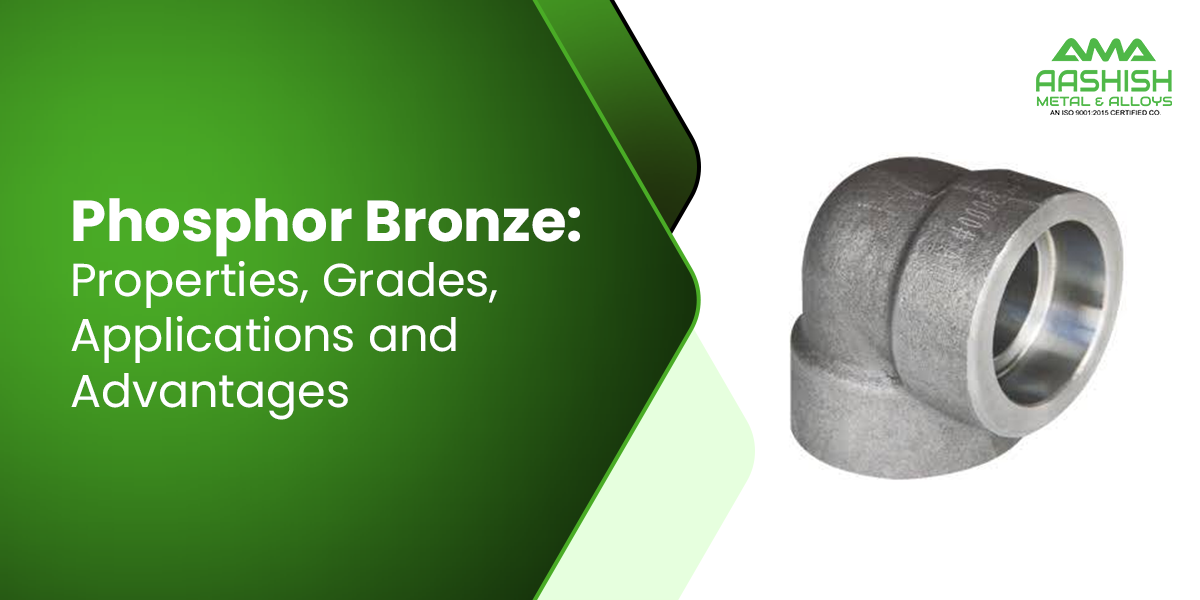
Socket weld pipe fittings (SW Fittings) are offered in various materials, such as stainless steel, carbon steel, high-performance alloys such as Hastelloy C22, Inconel 625, Incoloy 800, and Incoloy 825.
Common Types of Socket Weld Fittings
- Full and Half Couplings: Full couplings connect two pipes end to end; half couplings are threaded on one side only, with the other end welded into the pipeline.
- Reducing Coupling: Joins pipes of two different diameters. A socket weld reducer insert can serve the same purpose within a fitting.
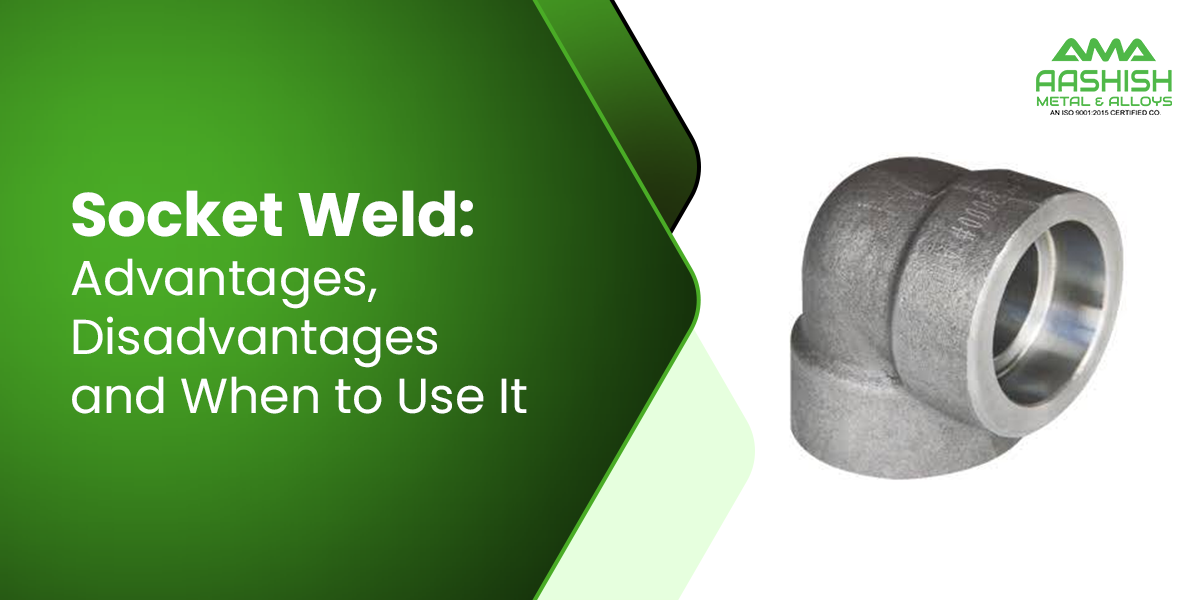
- Socket Weld Elbow: Redirects flow at 45-degree or 90-degree angles in short- or long-radius designs. See our stainless steel elbow guide for more detail.
- Bocket Weld Tee and Reducing Tee: Introduces a 90-degree branch from the main run, with the reducing version accommodating a smaller-diameter branch pipe.
- Socket Weld Union: A three-part fitting that must be fully tightened before welding to minimise seat warping.
- Socket Weld Flange: Features an internal shoulder recess for accurate pipe positioning. Used on small-bore, high-pressure lines. Refer to our article on selecting the right stainless steel flange to avoid common specification mistakes.
- Sockolet, Cap, and Cross: The sockolet creates a branch connection from a larger header pipe; the cap seals an open pipe end; the cross creates a four-way intersection.
Advantages of Socket Weld Pipe Fittings
- Since the pipe slides directly into the recessed socket of the fitting, neither the pipe nor the fitting requires bevelled end preparation, making installation and the welding process significantly more straightforward.
- Proper alignment is inherently maintained by the socket weld fitting design itself, eliminating the need for temporary tack welds during assembly.
- The design prevents weld metal from entering or contaminating the internal bore of the pipe.
- Socket weld fittings offer a leak-resistant alternative to forged threaded fittings, substantially reducing the risk of joint failure.
- Because they do not demand precise fit-up tolerances or special end machining (as butt weld joints do), overall fabrication and construction costs are reduced.
Disadvantages of Socket Weld Pipe Fittings
- Per ASME B31.1 para. 127.3(E), the pipe must first be pushed fully into the socket and then pulled back approximately 1/16 inch (1.6 mm) before welding. This mandatory expansion gap must be maintained by the welder to ensure joint integrity.
- Socket weld fittings generally offer only about half the pressure-bearing strength of butt weld fittings, which is why their application is typically limited to smaller pipe sizes of NPS 2 and below.
- Despite being used on smaller pipe sizes, socket weld fittings are priced considerably higher than butt weld fittings of equivalent dimensions.
- The internal crevices and expansion gap inherent to socket weld joints create pockets where moisture and deposits can accumulate, accelerating corrosion and making them unsuitable for radioactive or highly corrosive service environments.
- In food-grade or ultra-high-pressure (UHP) hygienic systems, socket welding is not permitted because incomplete weld penetration and residual crevices are extremely difficult to sanitise, creating virtual leak paths.
- The bottom clearance in a socket weld joint serves two purposes, relieving residual stress that builds up during weld metal solidification and accommodating differential thermal expansion between the mating components. Achieving this correctly demands considerable time, precision, and welding expertise.
- Since radiographic inspection of fillet welds is not feasible, accurate fit-up and welding technique become critical. Inspection is instead carried out through surface examination methods such as Magnetic Particle (MT) or Liquid Penetrant (PT) testing.
When to Use Socket Weld Fittings
Socket weld fittings are best suited to pipes of NPS 2 or smaller. They are the right choice when:
- The pipeline carries flammable, toxic, or high-value fluids where a leak-free joint is non-negotiable.
- Steam service operates between 300 and 600 psi and requires a compact, high-strength connection.
- Installation space is tight and the self-aligning socket simplifies the welding operation.
- Material compatibility is critical, requiring corrosion-resistant or high-temperature alloy fittings for aggressive process environments.
They are not suitable when hygiene is a priority, pipe diameters exceed NPS 2, or maximum joint strength is required, in which case butt weld fittings are preferred.
The Bottom Line
Socket weld pipe fittings provide a reliable, cost-effective, and leak-resistant connection for small-diameter, high-pressure piping systems. The self-aligning socket simplifies installation, eliminates pipe end preparation, and delivers consistent fillet weld joints suited to a wide range of industrial media. While the inherent crevice limits their use in hygienic or radioactive service, socket weld fittings remain a trusted solution in chemical, oil and gas, steam, and power generation pipelines.
Looking for Quality Socket Weld Fittings?
At Aashish Metals, we supply premium socket weld fittings in stainless steel, carbon steel, and high-performance alloys including Hastelloy, Inconel, and Incoloy, manufactured to ASME B16.11 standards. Whether you need standard grades or exotic materials for demanding process environments, our team is ready to help.